


Quick answer: the best food in Cusco is usually found away from the main square: neighborhood picanterías serve the most authentic traditional menu, San Pedro Market is perfect for fresh juices and cheap breakfasts, and San Blas is where the specialty coffee shops cluster. On your first day or two, stick to lighter food (soups, coca tea) while your body adjusts to the altitude.
Picanterías: where Cusco locals actually eat
A picantería is a family-run restaurant, almost always tucked away from the tourist circuit, cooking the same traditional menu for generations: big pots, shared tables, and the smell of rocoto chili and cumin greeting you at the door. It’s where Cusco families eat on weekends, and it’s usually also the cheapest way to eat well. Don’t expect a menu with photos or hotel-style service — you order at the counter or the cook tells you what’s on that day.
- Chiriuchu: the classic festive dish, served cold, combining guinea pig, chicken, sausage, dried beef, cheese, river seaweed (cochayuyo), corn tortilla and fava beans. It’s everywhere in June around Inti Raymi, but many picanterías serve it year-round.
- Cuy chactado: flattened, fried guinea pig, crispy on the outside, served with golden potatoes and salad. It’s a celebration dish rather than an everyday one, so picanterías often need a day’s notice.
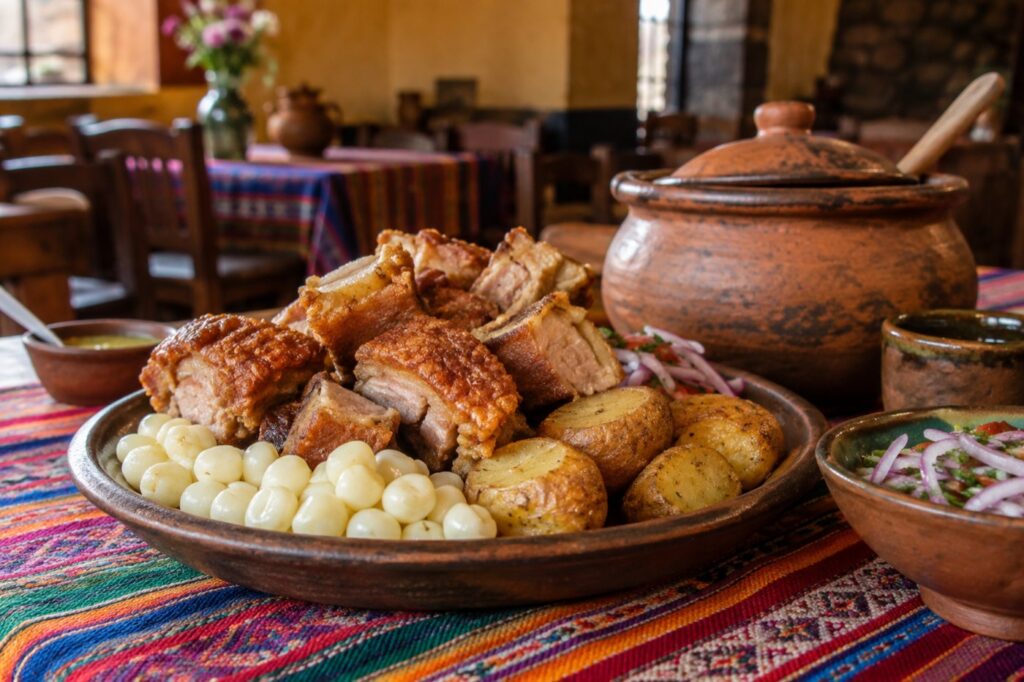
- Chicharrón cusqueño: pork chunks fried in their own fat, served with mote (large hominy corn) and an onion-and-rocoto salsa. It’s the most popular Sunday lunch order.
- Adobo cusqueño: pork marinated in chicha de jora and ají panca, slow-cooked. Traditionally eaten for Sunday breakfast with bread.
Lunch is the key window: most picanterías open between noon and 4 pm, and some close once the day’s pot runs out. Arriving before 1 pm gives you the best chance of getting the dish you’re after. Don’t expect English menus everywhere — a few words of Spanish (or pointing at what the table next to you is eating) go a long way, and the staff are generally happy to explain a dish if you ask.
San Pedro Market: menus, juices and local breakfast
A few blocks from the main square, San Pedro Market is Cusco’s central market and, for visitors, one of the quickest ways to understand how the city really eats. It has an entire food-stall section where a cook serves a full menu — starter, main and sometimes dessert — for a fraction of what a tourist restaurant charges.
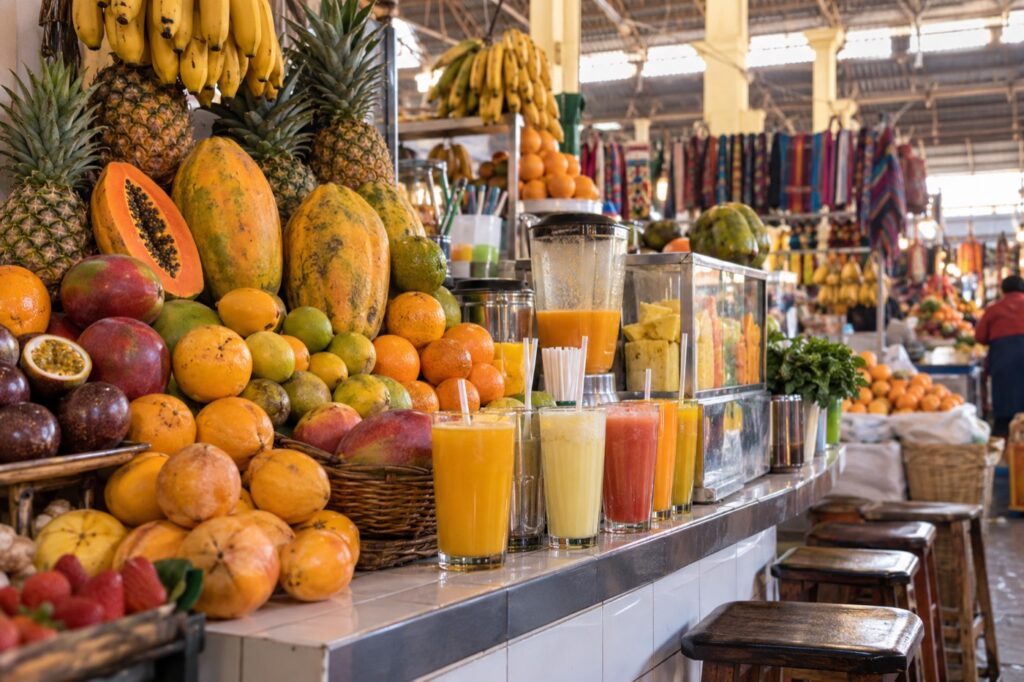
- The juice stalls are the easiest place to start: freshly squeezed fruit juices, blended with milk, oats or egg white if you want something more filling before a long day of walking.
- Midday menus include hearty soups (chicken broth, quinoa soup) followed by a rice-based main. It’s generous, home-style cooking at low cost.
- Pan chuta, a large round bread typical of the region, is sold at several stalls and makes a great snack for the train or bus ride.
Practical tip: pick stalls with steady foot traffic (constant turnover means fresher food), drink bottled or boiled water rather than tap, and on your first day in Cusco, hold off on ceviche or raw fish until your body has settled into the altitude and the new diet.
San Blas: specialty coffee and international food
Climbing up from the main square along steep cobblestone streets, San Blas is Cusco’s bohemian neighborhood: artisan workshops, viewpoints, and a specialty coffee scene that has grown fast in recent years. The pace here is different from the picanterías: small tables, single-origin Peruvian coffee brewed pour-over style, brunch menus with vegetarian and vegan options, and rooftop views over the city’s tiled roofs.
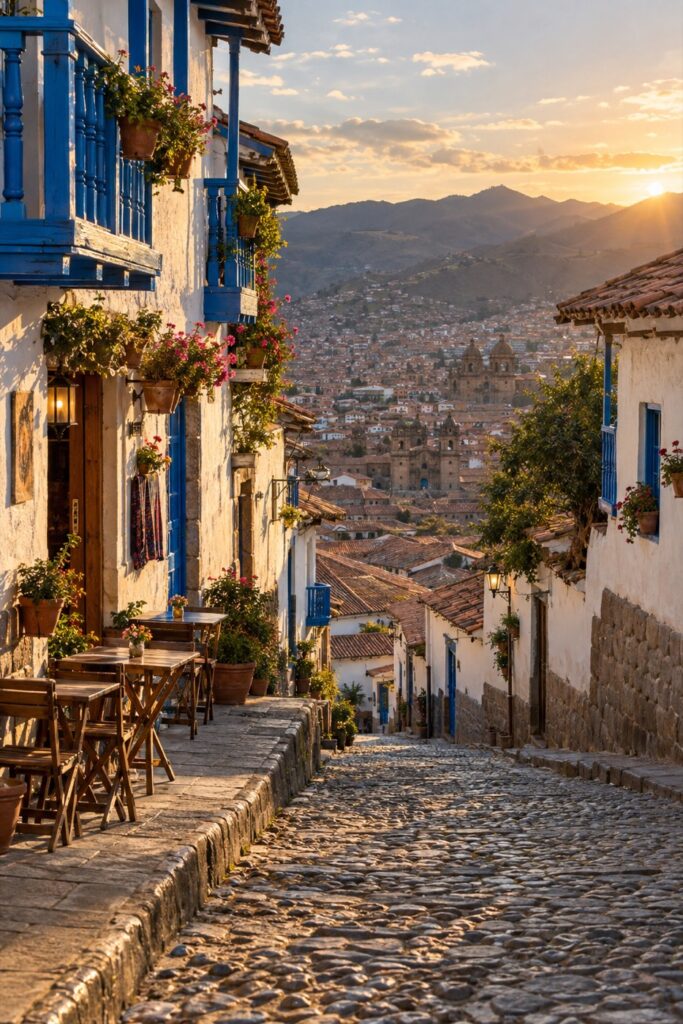
It’s the right area for a relaxed breakfast before a tour, a bit of work with decent wifi, or simply a rest after climbing the stairs. It’s also where you’ll find the widest range of international food in the city — from wood-fired pizza to Asian food — for days when you fancy something other than Andean cuisine.
What to eat in your first days (altitude food)
Cusco sits at roughly 3,400 meters above sea level, and the body typically needs 24 to 48 hours to adjust. During that window, heavy or greasy food digests poorly and can add to the usual altitude discomfort (headache, fatigue, mild nausea).
- Coca tea: served free at almost every hotel and restaurant; it helps ease mild altitude symptoms.
- Light soups: chicken broth or quinoa soup are easy to digest and very hydrating.
- Avoid alcohol and very greasy meals in the first 24-48 hours — they worsen the dehydration that comes with altitude.
- Fresh fruit and juices from San Pedro Market are a good way to add fluids and vitamins without overloading your stomach.
Once your body has acclimatized — usually by day two or three — you can enjoy guinea pig, chicharrón or adobo without any special caution.
The dishes you shouldn’t miss
Beyond what’s covered here, Cusco has a handful of dishes and drinks that deserve their own guide, from stuffed rocoto to chicha morada and roast pork. We go through each one in detail — ingredients and where to find them — in our guide to typical foods of Cusco you must try.
Tipping in Cusco restaurants
| Type of place | Typical tip |
|---|---|
| Picantería or market stall | Not required; rounding up is appreciated |
| Tourist or formal restaurant | ~10% if not already included (check for “service included”) |
| Tours with lunch included | Separate tip for the guide, not for the restaurant |
Tipping isn’t legally required in Peru, but it’s a widespread custom in the tourism industry. Pay in soles whenever you can — some places accept dollars, but usually at an exchange rate that isn’t in your favor.
How to eat well without losing tour time
Between an early tour departure and a long walk back uphill to your hotel, meal planning can eat into the little free time you have in Cusco. If your day is built around a tour, the simplest way to eat well without extra planning is to pick an excursion that already includes lunch. Our traditional Sacred Valley tour includes a buffet lunch with regional dishes, and our Cusco city tour takes you through the historic center while leaving free time to explore picanterías or San Pedro Market on your own. Message us on WhatsApp and we’ll help build the itinerary around your taste and the time you have in the city.
 Project Zion™ Theme.
