


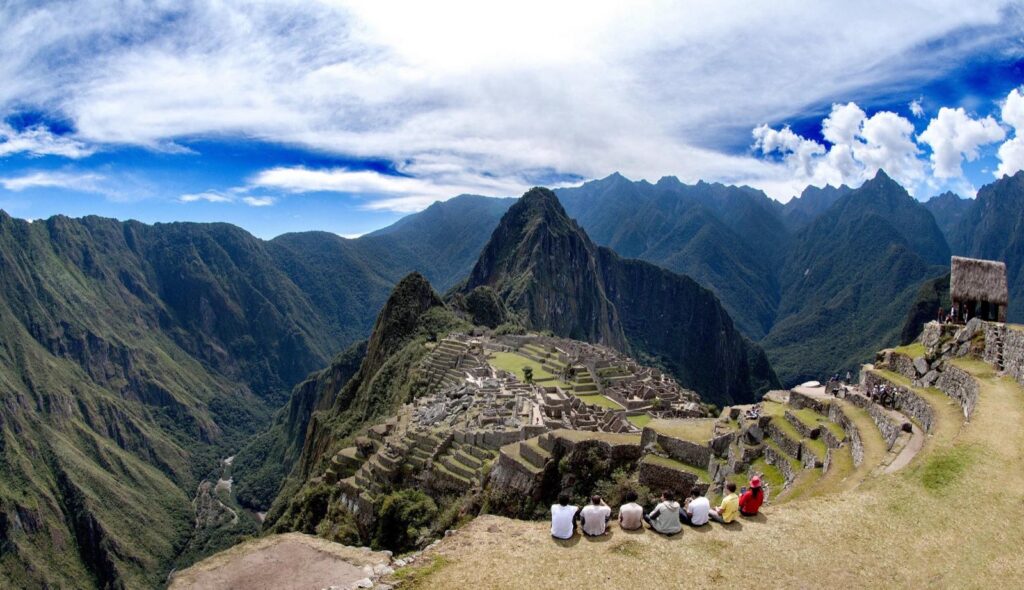
Quick answer: Machu Picchu hides details that surprise even repeat visitors: it was built without mortar, has a water canal system that still works today, was never found by the Spanish, was voted one of the New 7 Wonders of the World in 2007, and since 2024 entry runs on a strict daily quota with fixed circuits. Here are 20 curious, verified facts with no inflated numbers.
Inca engineering: built without modern technology
- 1. It was built without mortar or cement. The Incas carved granite blocks with such precision that they interlock without any binding material; on many walls you cannot slide a knife blade between the stones.
- 2. No iron tools or the wheel were used to shape the stone. Builders used hammers of harder stone (like hematite) and ropes to move blocks up earthen ramps, not wheeled carts.
- 3. The terraces weren’t only for farming: they prevent erosion. Each terrace has an internal fill of layered stone, gravel and soil that drains rainwater and stabilizes the mountainside, preventing landslides in an area of very high humidity.
- 4. It has a water canal system that still works. A network of 16 stone fountains distributes water from a natural spring across different sectors of the citadel; part of the original system still carries water today.
- 5. The Intihuatana is astronomically precise. This carved stone block functions as a solar clock: at noon on the equinoxes it casts no shadow at all, confirming the Incas’ advanced astronomical knowledge.
History, and the “discovery” that wasn’t quite one
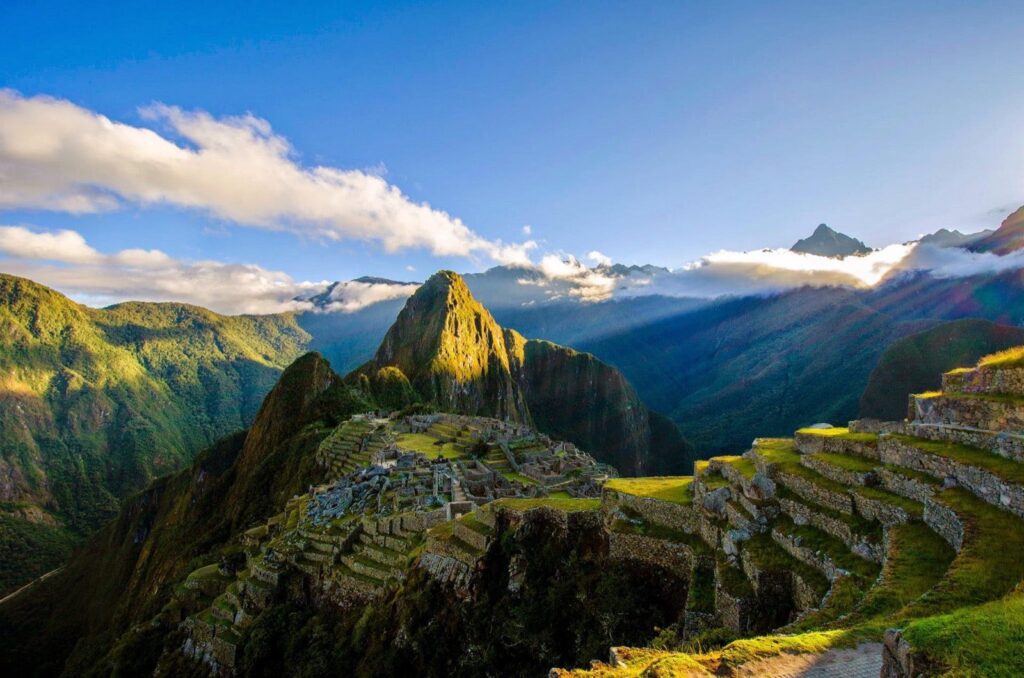
- 6. The Spanish never found Machu Picchu. Unlike Cusco or the Sacred Valley, there’s no record of conquistadors reaching the citadel, which is why it survived almost intact for centuries.
- 7. It wasn’t “discovered”: local families already knew about it. When American historian Hiram Bingham arrived in 1911, guided by local farmers, Quechua families were already farming part of the terraces. Bingham brought it to the world’s academic attention — he didn’t discover it out of nowhere.
- 8. It was likely abandoned, not destroyed. Evidence suggests Machu Picchu stopped being inhabited around the time of the Spanish conquest, probably due to epidemics and the collapse of the Inca Empire, rather than a direct attack on the site.
- 9. It became a UNESCO World Heritage Site in 1983. The designation covers both the citadel and the surrounding natural sanctuary, recognizing its combined cultural and ecological value.
- 10. In 2007 it was voted one of the New 7 Wonders of the World. The global poll organized by the New7Wonders foundation placed it alongside monuments like the Roman Colosseum and the Great Wall of China.
Architecture, names, and daily life
- 11. “Machu Picchu” means “old mountain” in Quechua. Its pointed neighbor, the peak that appears in almost every photo, is Huayna Picchu: “young mountain”.
- 12. It was built in the 15th century, under Inca Pachacutec. Archaeological studies and radiocarbon dating place its construction in that period, part of the broader expansion of the Inca Empire.
- 13. Everything points to a royal estate, not a “lost city”. The mix of temples, agricultural terraces, and housing of different social ranks suggests it was a seasonal royal retreat for the Inca elite, rather than a permanent urban center.
- 14. It has more than 150 structures. Temples, plazas, homes, storage buildings, and staircases are spread across terraces connected by more than a hundred flights of stone steps.
- 15. The Temple of the Sun has the only curved wall on site. It’s the only circular building in Machu Picchu and is aligned so that sunrise light on the June solstice enters through one of its windows.
Facts that surprise today’s visitors
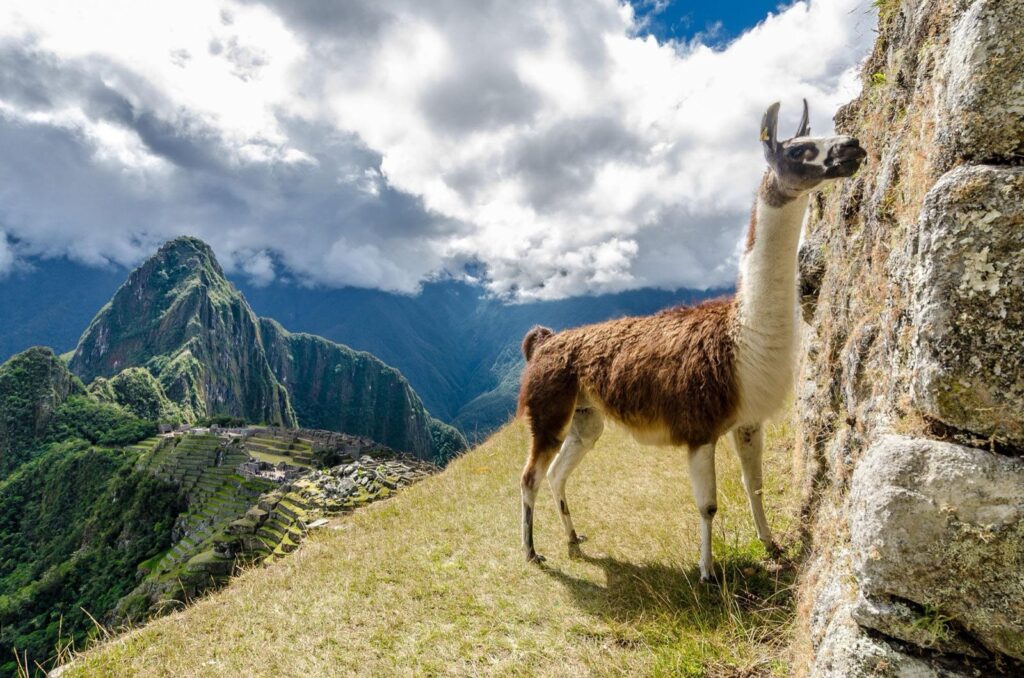
- 16. The llamas aren’t part of the site’s original Inca culture. They were introduced later, in the 20th century, as part of sanctuary management; today they serve the practical purpose of keeping the terrace grass short.
- 17. It’s lower than Cusco, not higher. Machu Picchu sits at about 2,430 meters above sea level, nearly 1,000 meters below Cusco (~3,400 m), which is why many travelers feel altitude relief on the way down.
- 18. It has been a Historic Sanctuary of Peru since 1981. This category protects not just the ruins but also the surrounding cloud forest ecosystem, home to orchids, the spectacled bear, and dozens of bird species.
- 19. Since 2024, entry runs on a daily quota with fixed circuits. You can no longer wander freely: each ticket corresponds to a specific route and entry time, a measure to protect the stonework and reduce congestion.
- 20. No major earthquake has brought it down in centuries. This is partly credited to Inca building technique: blocks slightly tilted inward and fitted without mortar absorb seismic movement better than a rigid structure would.
See it all with your own eyes
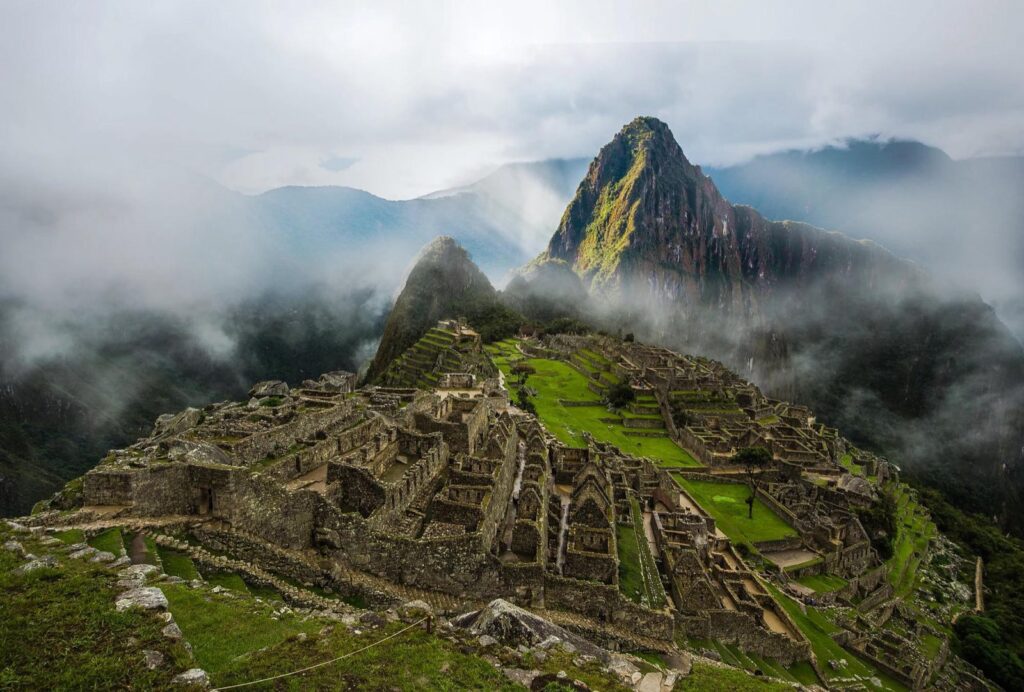
Reading about the Intihuatana or the Temple of the Sun’s curved wall is one thing; seeing them up close, with a guide explaining the Inca engineering right on site, is something else entirely. If you want to explore Machu Picchu without the hassle of booking train tickets or entries yourself, check our full-day Machu Picchu by train tour or the classic 4-day Inca Trail, the best way to arrive on foot along the original Inca route. If you’d rather skip the permit paperwork, the Salkantay Trek to Machu Picchu combines high-mountain scenery with the arrival at the citadel. Message us on WhatsApp and we’ll plan the itinerary around your dates.
 Project Zion™ Theme.
