


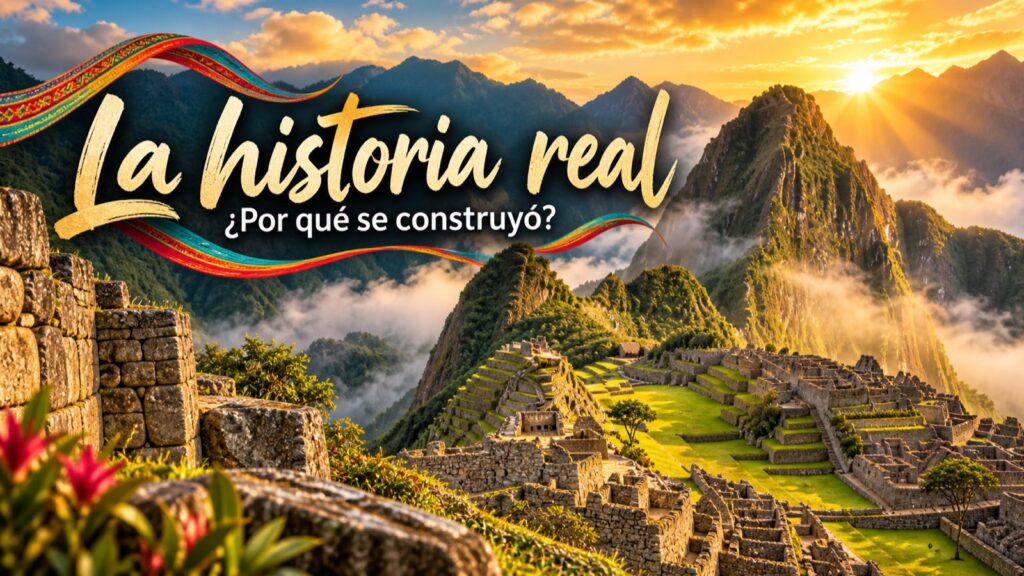
Quick answer: Machu Picchu was built around 1450 AD, at the height of the Inca empire, under Emperor Pachacútec. Academic research agrees it functioned as both a royal retreat and a religious sanctuary, not an ordinary city. It was never destroyed or “lost” to local people — it was simply abandoned after the Spanish conquest and stayed off the international radar until 1911, when American explorer Hiram Bingham brought it to global attention.
Who built Machu Picchu, and when?
Archaeological evidence — pottery styles, construction techniques, and radiocarbon dating published in peer-reviewed journals — places the construction of Machu Picchu at around 1450, during the reign of Pachacútec, the Inca ruler who turned the small kingdom of Cusco into the Tahuantinsuyo, the Inca empire. There is no exact date carved in stone — the Inca had no writing system as we understand it — so historians work with approximations backed by several independent lines of evidence.
It was built using polygonal ashlar masonry: granite blocks carved and fitted together without mortar, with such precision that it is famously hard to slide a sheet of paper between two stones. This earthquake-resistant technique is the same one seen at Sacsayhuamán and Ollantaytambo, and it explains why the citadel is still standing more than 500 years later, having outlasted quakes that toppled nearby colonial buildings.
What was it built for? The main theories
This is where the real academic debate lives. There is no Inca document stating “this is a sanctuary” or “this is a palace” — archaeologists reconstruct the site’s function from its architecture, location, and the objects found there. The three best-supported theories, which are not mutually exclusive, are:
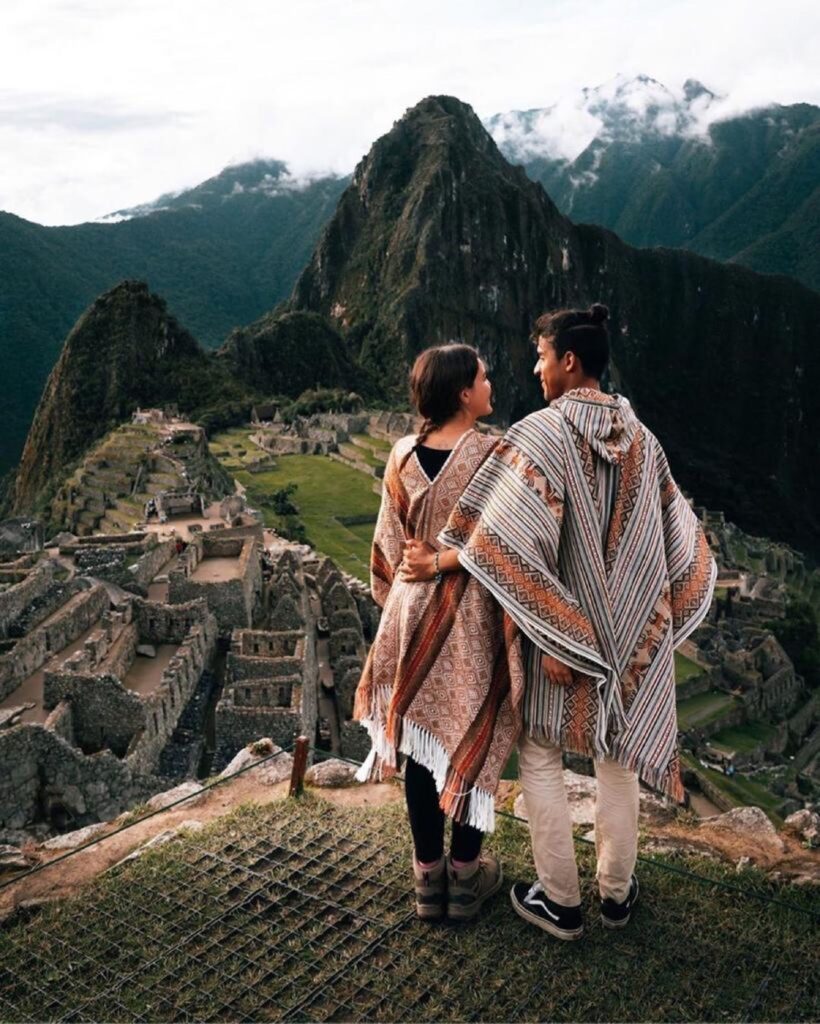
- Pachacútec’s royal estate: the most widely accepted theory today, first proposed by historian John Rowe. Machu Picchu would have been a private estate of the emperor and his panaca (royal lineage), a retreat for personal worship, similar to other “royal llactas” that Inca emperors built for themselves outside Cusco.
- Religious sanctuary: the layout of temples — the Temple of the Sun, the Intihuatana, the Temple of the Three Windows — and their relationship to sacred mountains (apus) such as Huayna Picchu suggest a strong ceremonial component. For the Inca, the landscape itself was sacred, and Machu Picchu is surrounded by peaks that were likely worshipped.
- Astronomical observatory: several structures, especially the Intihuatana and the Temple of the Sun, are aligned with solar events such as the June solstice. This does not contradict the other theories: Andean astronomy was woven into religion and the agricultural calendar, not treated as a separate discipline.
The prevailing reading among archaeologists today is that Machu Picchu combined all three functions: a royal retreat with active temples, a built-in solar calendar, and a permanent population of servants, priests, and “acllas” (women dedicated to worship) estimated at 300 to 750 people during its peak activity. It was, in any case, neither a wartime fortress-city nor an administrative capital comparable to Cusco.
Why was Machu Picchu abandoned?
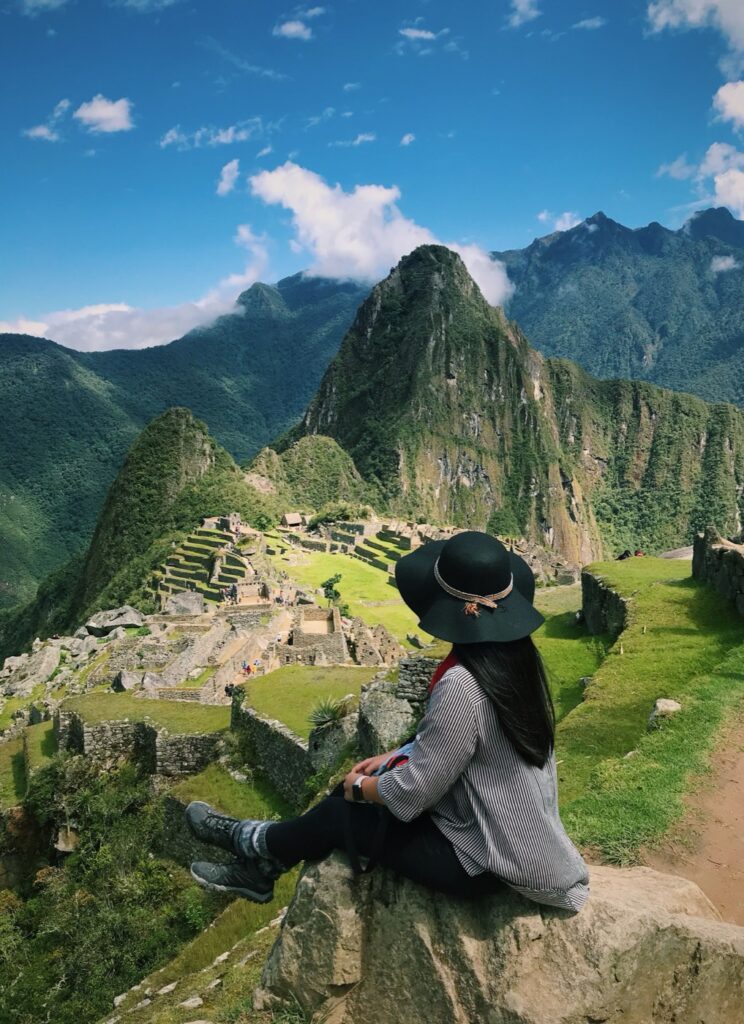
The short answer: the Spanish never found it. Unlike Cusco, which was captured, looted, and rebuilt as a colonial city in 1533, there is no Spanish-era record that mentions Machu Picchu. This is key to understanding why it is so well preserved: while other Inca sites were dismantled to build colonial churches and houses with their stones, Machu Picchu simply stayed off the conquest’s map.
The strongest hypothesis about the abandonment does not point to an attack or a sudden flight, but to a gradual process tied to the collapse of the Inca system itself: with Cusco under Spanish control from 1533 and the ruling elite dismantled, royal estates like Machu Picchu lost their purpose — there was no longer an emperor or court to sustain — and their inhabitants scattered or died from the epidemics that preceded and accompanied the conquest, such as smallpox, which spread through the Andes even before the Spanish physically reached Cusco.
It is a common myth that Machu Picchu was “lost” or “secret” in an absolute sense. Quechua-speaking families in the area, such as the Recharte and Álvarez families who lived and farmed on the nearby slopes, knew the site and used it for agriculture long before 1911. What actually happened is that Machu Picchu disappeared from Western academic and cartographic knowledge, hidden under jungle vegetation that made it invisible to anyone who did not know exactly where to look.
Hiram Bingham’s 1911 “rediscovery”
On July 24, 1911, American professor and explorer Hiram Bingham III, from Yale University, arrived at the site guided by Melchor Arteaga, a local farmer who knew the ruins, with help from a boy from the Recharte family who lived nearby. Bingham was actually searching for Vilcabamba, the last Inca capital of resistance against the Spanish, and came to believe — mistakenly, according to later research — that he had found that lost city at Machu Picchu.
What Bingham did do was document the site with photographs and publish it in 1913 in National Geographic magazine, backed by Yale and the National Geographic Society, which funded excavation expeditions between 1912 and 1915. That publication is what put Machu Picchu on the world map, and it explains why, in the international imagination, people speak of a “discovery” when what actually happened was scientific disclosure of a place local people had never forgotten.
A controversial chapter of this story is that Bingham took thousands of artifacts — pottery, bones, metal objects — to Yale for study, under permits from the Peruvian government of the time. Peru sought the return of these pieces for nearly a century; after a long negotiation process, Yale agreed to their repatriation, and much of that collection is now displayed at the Museo Casa Concha in Cusco.
From forgotten ruin to Wonder of the World
After Bingham’s publication, Machu Picchu went through decades of excavation, partial restoration, and slow tourism growth to become the icon it is today. Two institutional milestones mark that international recognition:
- 1983 — World Heritage Site: UNESCO inscribed the “Historic Sanctuary of Machu Picchu” on its list, recognizing both the citadel’s cultural value and the surrounding area’s ecological value, an uncommon “mixed heritage” case that protects ruins and Andean biodiversity at the same time.
- 2007 — New Wonder of the World: in a global public vote organized by the New7Wonders foundation, Machu Picchu was chosen as one of the Seven New Wonders of the Modern World, alongside the Great Wall of China, Petra, the Roman Colosseum, Chichén Itzá, Christ the Redeemer, and the Taj Mahal.
These two milestones, combined with growing connectivity to Cusco, drove tourism to the point where the Peruvian state had to introduce daily quotas and visit circuits to protect the structures from wear. Knowing this history completely changes how you experience the site today: walking through the Temple of the Sun or the Sacred Plaza is not just seeing well-preserved stones — it is walking through what was very likely the sacred retreat of an emperor who never imagined his private estate would become South America’s most recognized tourist icon.
If you want to see the sectors behind these theories with your own eyes — the Temple of the Sun, the Intihuatana, the royal terraces — the best way is with a guide who connects each structure to its historical function. Check out our full-day Machu Picchu tour, or if you would rather arrive on foot along a route the Inca themselves used, our Salkantay trek to Machu Picchu. Message us on WhatsApp and we will build the itinerary around your dates.
 Project Zion™ Theme.
