


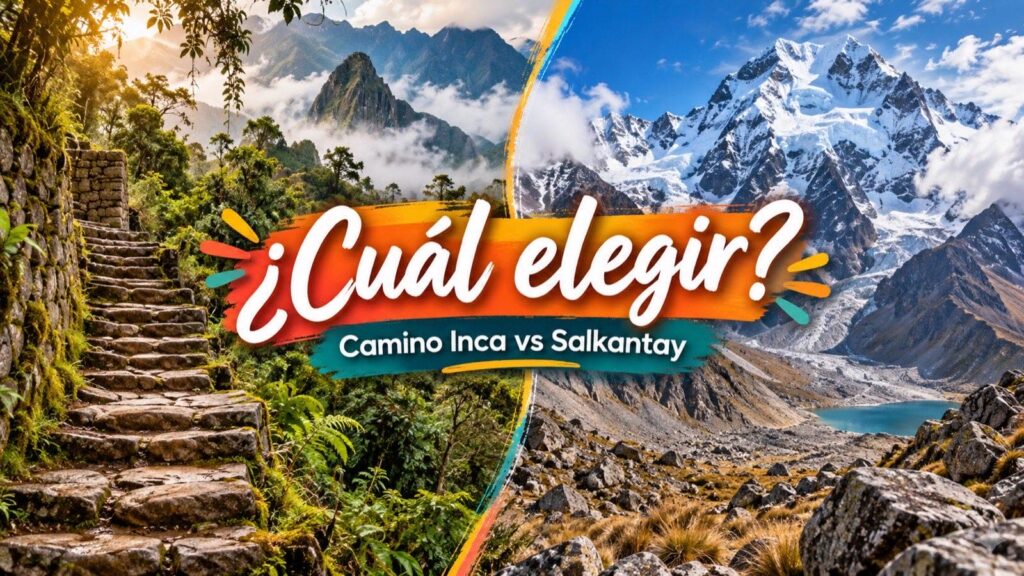
Quick answer: choose the Inca Trail if you want to hike the original Inca route and walk into Machu Picchu through the Sun Gate — book months ahead, as daily permits are limited. Choose Salkantay if you prefer dramatic high-mountain scenery, flexible dates and a lower budget; it has no permit quota and stays open year-round.
It is the classic dilemma for anyone who wants to reach Machu Picchu on foot: Inca Trail or Salkantay? Both treks end at the citadel, both are spectacular, and both demand decent fitness. But they are very different experiences when it comes to permits, price, landscapes and logistics. Here is the honest comparison — no pushing one over the other.
Permits: the difference that shapes everything
The Inca Trail is a route regulated by the Peruvian government, with a quota of around 500 permits per day — a number that includes porters, cooks and guides. In practice, only about 200 trekkers start each day. Permits are nominal, non-transferable, and sell out 3 to 6 months ahead in high season (May to September). No permit, no Inca Trail: there is no last-minute purchase.
The Salkantay trek has no quota. It is a free alternative route, so you can book weeks or even days in advance — you only need to secure your Machu Picchu entrance ticket separately for the final day. If you are planning on short notice, Salkantay is the realistic choice.
Comparison table: Inca Trail vs Salkantay
| Classic Inca Trail | Salkantay Trek | |
|---|---|---|
| Typical duration | 4 days / 3 nights | 5 days / 4 nights |
| Approx. distance | ~43 km (~26 mi) | ~70 km (~43 mi) |
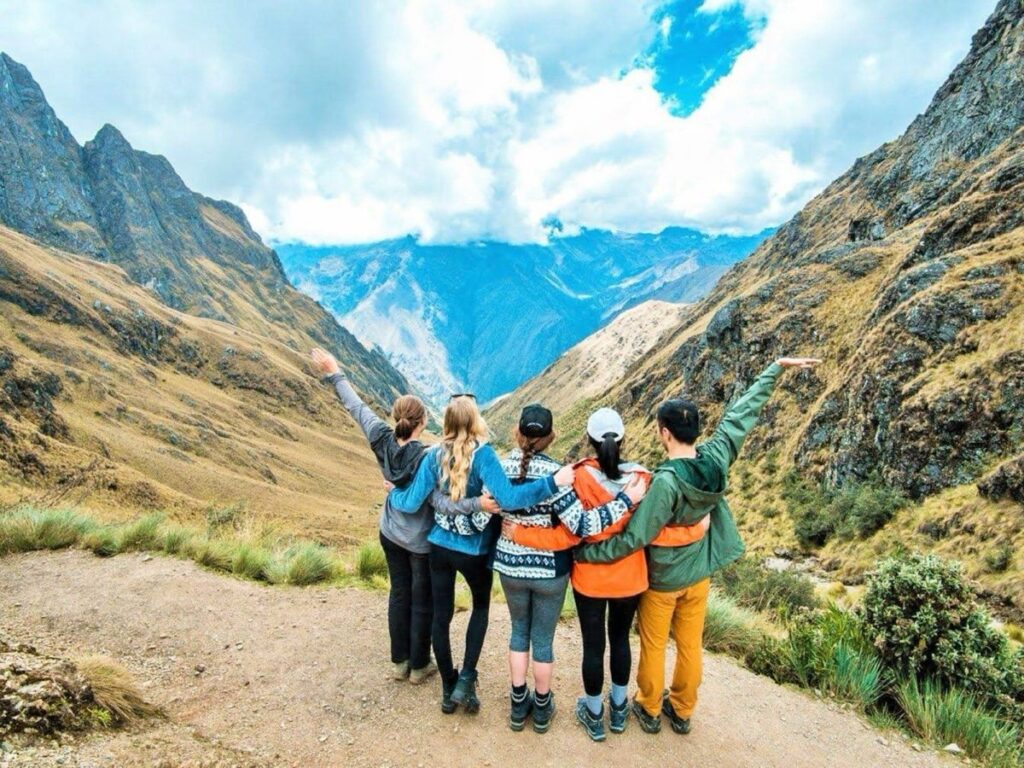
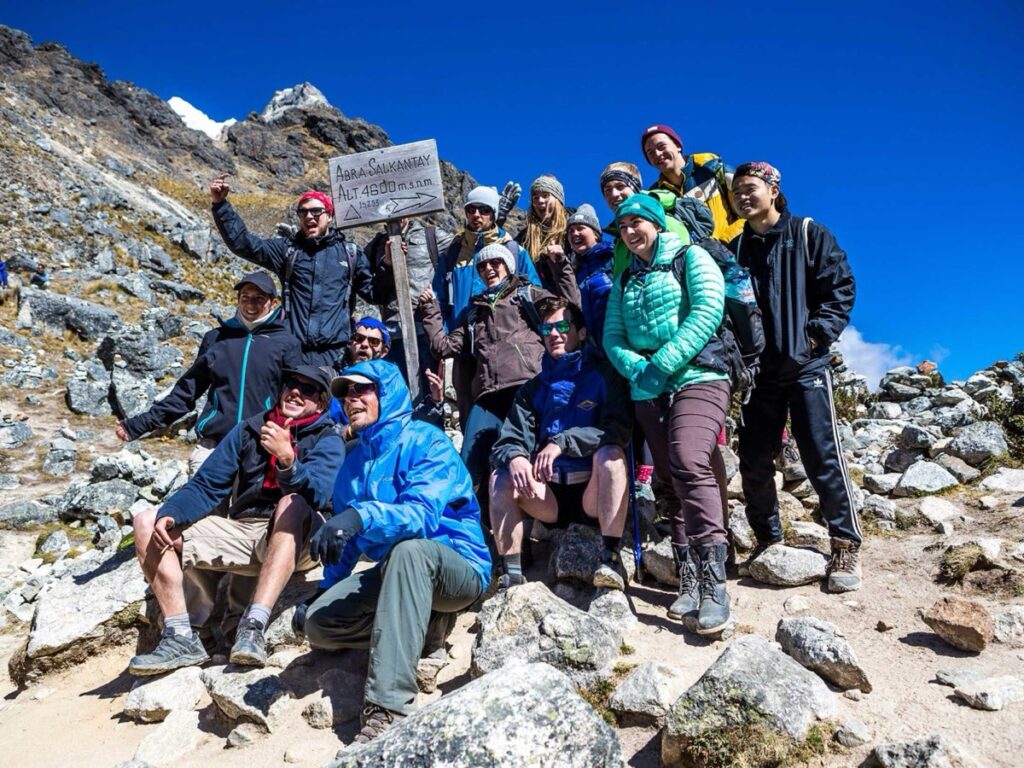
| Highest point | Dead Woman’s Pass (~4,200 m) | Salkantay Pass (~4,600 m) |
| Permits | Limited daily quota, book months ahead | No quota, flexible booking |
| Reference price | Higher (~US$ 700+) | More affordable (~US$ 400-500) |
| Arrival at Machu Picchu | On foot through the Sun Gate (Inti Punku) | Bus up from Aguas Calientes |
| Annual closure | All of February (maintenance) | Open year-round |
Prices vary by operator, season and included services — treat them as a reference and always verify the current quote before booking.
Landscapes: archaeology vs high mountains
The Inca Trail is an open-air museum. You walk on stone paving laid more than 500 years ago, pass through tunnels carved into the rock, and visit archaeological sites that can only be reached on foot: Llactapata, Runkurakay, Sayacmarca, Phuyupatamarca and Wiñay Wayna. The final stretch crosses orchid-filled cloud forest before the grand finale — seeing Machu Picchu spread out below you at sunrise.
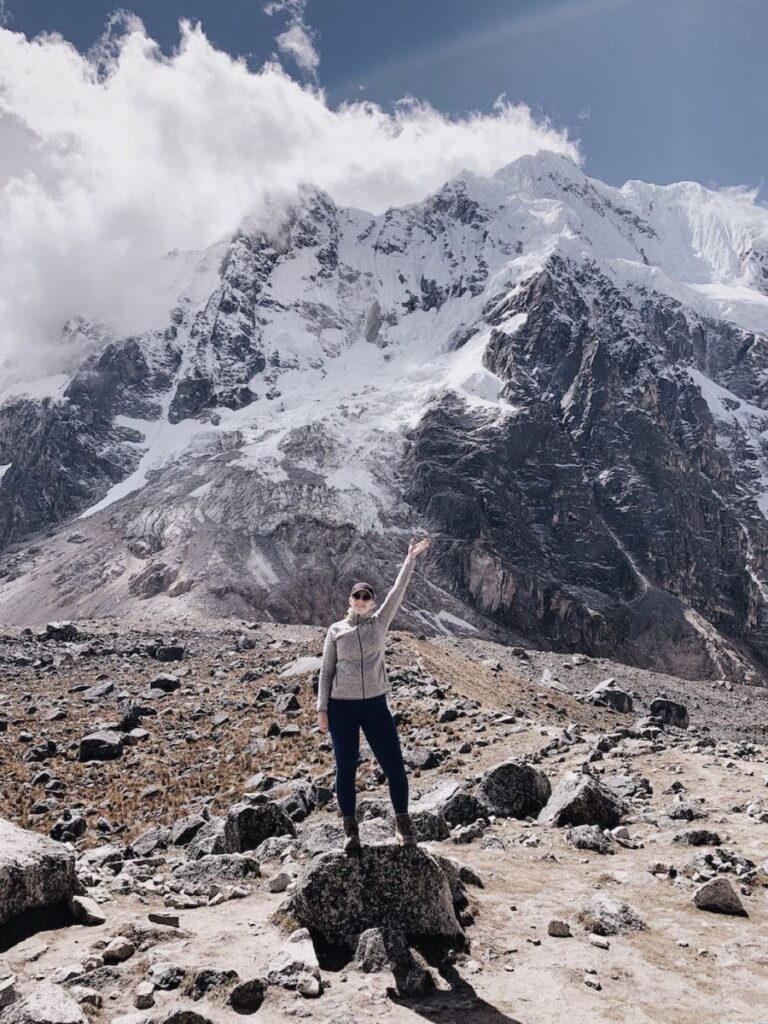
The Salkantay is raw nature. You go from glaciers and turquoise lakes — most groups visit Humantay Lake on day one — up to the Salkantay Pass at ~4,600 meters, at the foot of the sacred snow peak, then descend into the high jungle: coffee farms, fruit plantations, warm weather. In two days you drop from freezing puna to the tropics. If dramatic mountain scenery is your priority, Salkantay wins.
Difficulty and campsites
- Inca Trail: day two is the toughest, climbing to Dead Woman’s Pass (~4,200 m). Endless stone stairs are hard on the knees on the descents. Campsites are designated, and a porter team carries tents and kitchen gear.
- Salkantay: more kilometers and a higher pass (~4,600 m), but generally more gradual gradients. Nights at Soraypampa can be bitterly cold; several operations offer domes or cabins instead of tents.
- For both: acclimatizing 2-3 days in Cusco before departure is the best insurance against altitude sickness.
Arriving at Machu Picchu: the emotional difference
Only the Inca Trail enters Machu Picchu on foot through the Sun Gate (Inti Punku), with the citadel appearing at your feet at dawn on day four. No other trek replicates that moment. On the Salkantay, the hike ends in Aguas Calientes: you sleep in a hotel and ride the bus up to Machu Picchu the next morning (or climb the stairs) like every other visitor. The visit itself is just as complete — but the triumphant entrance belongs to the Inca Trail alone.
When to go — and the February detail
The Inca Trail closes for the whole of February for maintenance during the rainy season; the Salkantay stays open all year, though from December to March you should expect rain and mud. The best window for both is the dry season, May to September — which is exactly when Inca Trail permits are in highest demand. If you travel in those months and want the original route, book as soon as your dates are set.
So, which one is right for you?
- Choose the Inca Trail if you dream of the original route, the trek-only archaeological sites and the Sun Gate entrance — and can book months in advance.
- Choose the Salkantay if you want big-mountain scenery, decided to travel recently, are visiting in February, or are watching your budget.
- Short on time? The 2-day Short Inca Trail still enters through the Sun Gate with a fraction of the effort.
At Andean Treks we operate both routes with local guides: check out the Classic Inca Trail (4 days), the Salkantay Trek to Machu Picchu or the Short Inca Trail (2 days). Still undecided? Message us on WhatsApp and we will help you choose based on your dates, fitness and budget.
 Project Zion™ Theme.
