


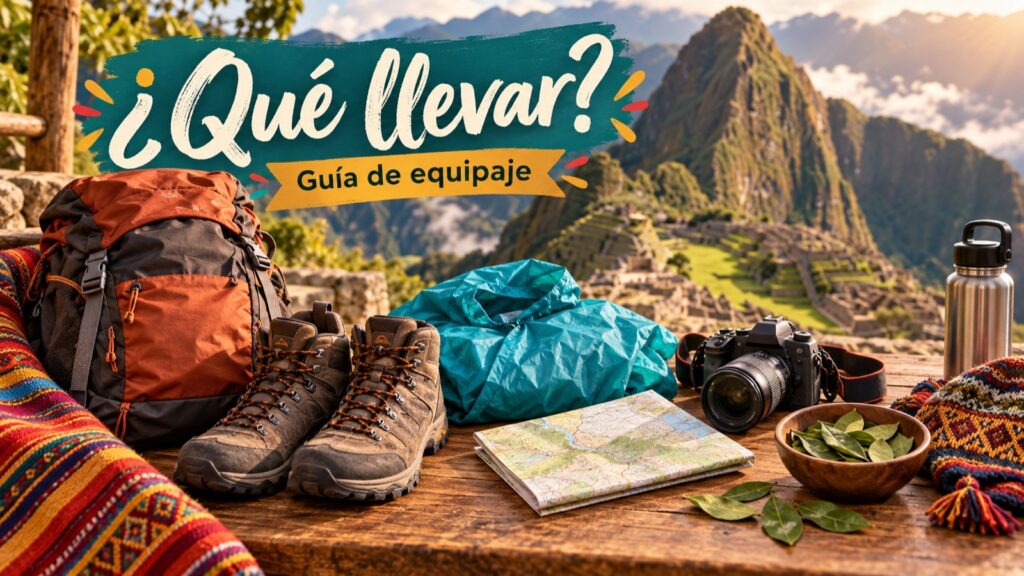
Quick answer: pack in layers (thermal base, fleece, waterproof shell with hood), closed hiking shoes, strong sunscreen, insect repellent, a basic first-aid kit and your physical passport, mandatory for entry. Adjust your list for dry season (May-September) versus rainy season (November-March), and for a day tour versus a multi-day trek: camping gear changes everything.
How your packing list changes by season
Cusco and Machu Picchu have two marked seasons, not four. The dry season (May to September) brings clear daytime skies and sharp night cold, with below-freezing temperatures on the Inca Trail or Salkantay. The rainy season (November to March) is warmer but with short, heavy downpours, usually in the afternoon; April and October are unpredictable shoulder months.
| Season | Packing priority | Main risk |
|---|---|---|
| Dry (May-Sep) | Warm layers, beanie, gloves, high-SPF sunscreen | Night and early-morning cold, dehydration from strong sun |
| Rainy (Nov-Mar) | Quality rain shell, backpack cover, dry bags | Muddy trails, afternoon downpours, gear staying damp |
| Shoulder (Apr, Oct) | Both combined — layers plus rain shell always within reach | Weather shifts within hours, no fixed pattern |
A common mistake is packing only for midday heat at the citadel (2,430 m) and forgetting that Cusco sits at roughly 3,400 m, where nights drop several degrees even in dry season. Always pack for the coldest point on your route, not for the final destination.
Day tour vs. multi-day trek: two different lists
If you’re doing Machu Picchu on a full-day train tour, your backpack fits in a few kilos. If you’re hiking the Inca Trail or Salkantay, you’re packing to sleep several nights in a tent or lodge, with a porter or mule carrying a strictly limited weight.
Backpack for a one-day tour
- Small daypack (20-25 liters) — never one of the large sizes banned inside the citadel
- Reusable water bottle (no drinks sold inside the site)
- Light snack: fruit, nuts, energy bars
- Lightweight rain jacket or foldable poncho, even in dry season
- Sunscreen, hat or cap, sunglasses
- Physical passport, printed or digital entry ticket, cash in soles for restrooms and tips
- Camera or phone with a full battery — outlets in Aguas Calientes are limited
Gear for the Inca Trail or Salkantay (multi-day)
- Sleeping bag rated for below-freezing temperatures (rentable in Cusco if you don’t own one)
- Trekking poles with rubber tips (metal tips are banned in archaeological zones)
- Broken-in hiking boots — never brand-new ones on departure day
- Thermal base layer, fleece, waterproof jacket, spare clothes in a dry bag
- Headlamp with spare batteries for camp
- Insect repellent, sunscreen, UV-protective lip balm
- Personal first-aid kit with altitude sickness medication if you normally use it
- Waterproof bag or backpack liner to protect gear from rain
- Cash in soles for porter, guide and cook tips, plus restrooms in Aguas Calientes
Your agency normally provides tent, sleeping mat and cooking gear — always confirm what your operator includes before buying or renting anything on your own.
The layering system that actually works
Weather in the Andes shifts in minutes: strong sun, cold wind and sudden rain can all happen the same day. The solution isn’t one thick jacket — it’s three layers you combine as needed:
- Base layer: quick-dry thermal shirt (avoid cotton, which stays damp and cools your body down).
- Mid layer: fleece or lightweight down jacket for early-morning and nighttime cold.
- Outer layer: waterproof jacket with a hood, windproof, which also protects against sun and trail dust.
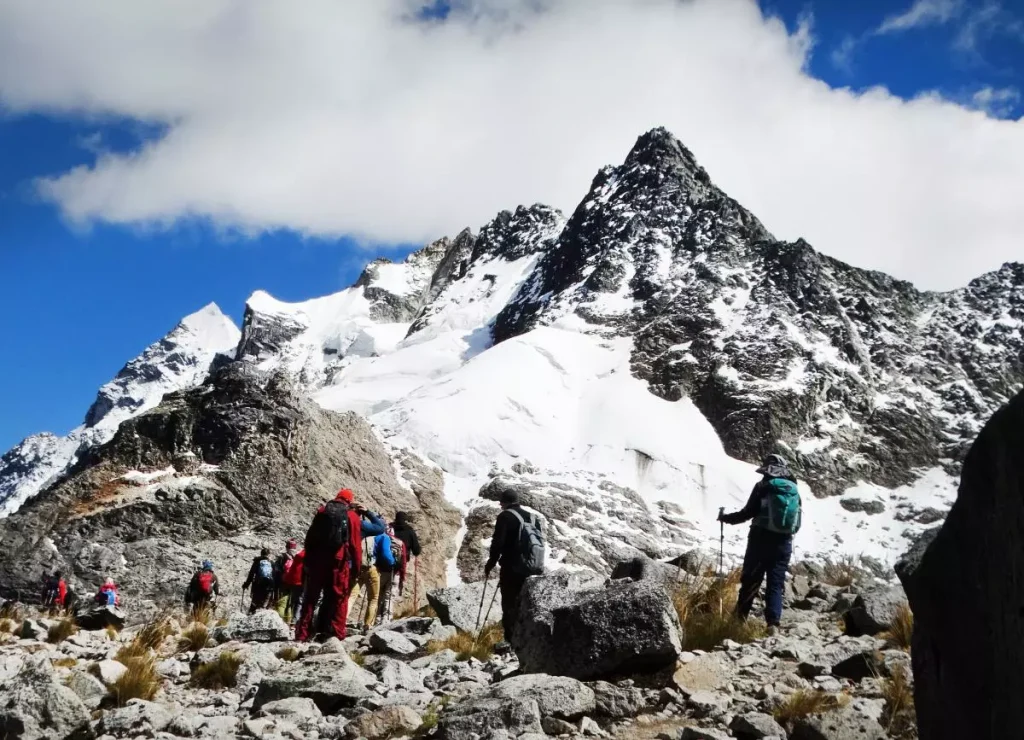
Add a hat that covers your ears, lightweight gloves and non-cotton hiking socks that dry fast — damp feet are the number-one cause of blisters on multi-day hikes.
Footwear, sun protection and an altitude kit
Footwear is the single most important decision if you’ll walk more than a couple of hours: hiking shoes with good grip for day tours, waterproof mid-boots for the Inca Trail or Salkantay. Never break in new footwear on hiking day.
Cusco’s altitude (roughly 3,400 m) intensifies solar radiation even on cold days: use SPF 50 or higher, reapply every 2-3 hours, and don’t forget your lips and neck. Your basic kit should include a painkiller, something for stomach upset, bandages and an anti-inflammatory cream for bumps or chafing. If you have a history of altitude sickness, ask your doctor about acetazolamide before the trip, and chew coca leaves or drink coca tea in your first days as a traditional aid for acclimatization.
Documents: your passport is mandatory, no exceptions
Your Machu Picchu ticket is nominal: the name and passport number you used to buy it must exactly match the physical document you present at the gate. No copies, phone photos or a different country’s ID are accepted (except your own for Peruvian citizens). Also bring:
- Your Machu Picchu entry ticket (printed or downloaded — no internet needed on site)
- Train ticket and tour voucher if traveling with an agency
- A digital copy of your passport saved on your phone, just in case
- Travel insurance with altitude and trekking coverage if you’re doing a multi-day hike
What you can NOT bring into the citadel
The Ministry of Culture’s rules are strict and enforced at the entry checkpoint: if you carry a banned item, you’ll need to leave it at the entrance lockers (limited space and time) or you simply won’t be allowed in.
- Backpacks or bags larger than 40 x 35 x 20 cm
- Trekking poles with metal tips (must have rubber tips)
- Drones and professional filming equipment without a special permit
- Food and drinks other than water in a reusable bottle
- Tripods, large umbrellas and selfie sticks
- Pet food or animals — pets are not allowed inside
- Any sharp objects, spray cans or paint
If you’re unsure whether something will be allowed, the practical rule is simple: go light. The less you carry, the more you’ll enjoy walking through the terraces and staircases of the site.
Pack with confidence
If you’d rather handle everything in a single day without carrying camping gear, our Machu Picchu by train tour from Ollantaytambo includes transport, train, bus and guide — you only need the light daypack from the list above. If you’re after the full multi-day experience, check the Classic Inca Trail or the Salkantay Trek, where our team confirms exactly what to bring and what the agency provides before you set out. Message us on WhatsApp and we’ll help you build your list for the date and route you choose.
 Project Zion™ Theme.
