


Quick answer: the Sacred Valley of the Incas brings together Pisac, Ollantaytambo, Chinchero, Maras and Moray in a 1 to 2-day route from Cusco. It sits at a lower altitude than the city (~2,800-3,000 m versus ~3,400 m), so it also helps you acclimatize. You can visit with the general tourist ticket or on a private tour, and it is the best warm-up before heading up to Machu Picchu.
Why the Sacred Valley is a must-stop
The Sacred Valley follows the Urubamba River between Pisac and Ollantaytambo, boxed in by mountains and sitting noticeably lower than Cusco. That difference makes it the ideal place to spend your first or second day in the region: you sleep lower, your body adapts better, and along the way you cover four of southern Peru’s most important archaeological and historical sites. If your route to Machu Picchu leaves by train from Ollantaytambo, you’ll also already know the town and save time on travel day.
Pisac: Inca ruins and the most colorful market
Pisac combines two very different experiences in one town. Above, the Pisac archaeological complex spreads across the hillside with fan-shaped agricultural terraces, a ceremonial sector with the site’s own Intihuatana stone, and one of the valley’s largest Inca necropolises, visible on the rocky slopes facing the site. The views over the Urubamba valley are among the most photographed in the region.
Down in the town square, the Pisac market runs daily (with an expanded fair on Tuesdays, Thursdays and Sundays) and brings together textiles, ceramics, silver and farm produce from nearby communities. It’s a solid place to buy souvenirs with genuine craftsmanship, though it’s worth bargaining respectfully and comparing prices between stalls.
Ollantaytambo: the only Inca fortress still lived in
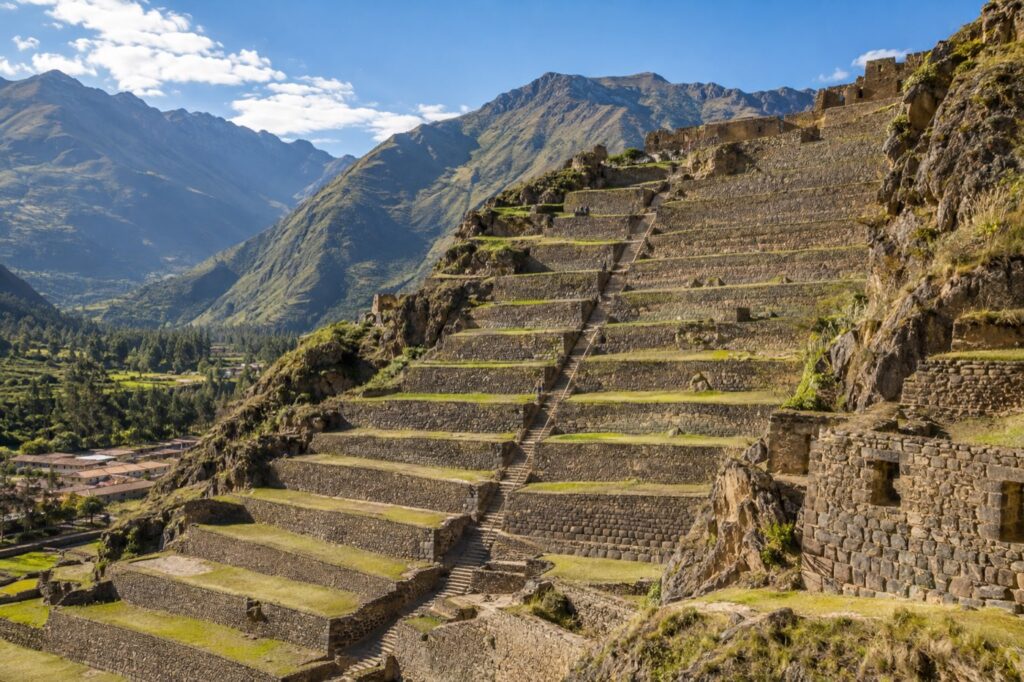
Ollantaytambo is unlike any other site in the valley: the modern town keeps its original Inca street layout, with water canals running alongside cobblestone streets and families still living within stone walls more than 500 years old. Above the town rises the fortress, a monumental staircase of terraces protecting the Temple of the Sun, built with pink stone blocks hauled from a quarry across the valley — an engineering feat that still impresses today.
Climbing to the temple takes 30 to 45 minutes up steep steps (staying hydrated helps), and the reward is a full view over the town and the valley. Ollantaytambo is also the most common departure station for the train to Machu Picchu, so many travelers end their Sacred Valley circuit here before continuing on.
Chinchero: the weavers’ town
At around 3,700 m, Chinchero is the highest point of the circuit, but it’s easy to fit in as a short stop on the way to or from Cusco. It combines a colonial church built on Inca foundations, stepped agricultural terraces and, above all, family-run textile workshops where weavers demonstrate the full live process: shearing, washing with natural roots, dyeing with plant extracts and insects like cochineal, and hand-spinning with a drop spindle. It’s the best stop in the valley to see exactly where the textiles sold at the markets come from.
Maras and Moray: salt ponds and circular terraces
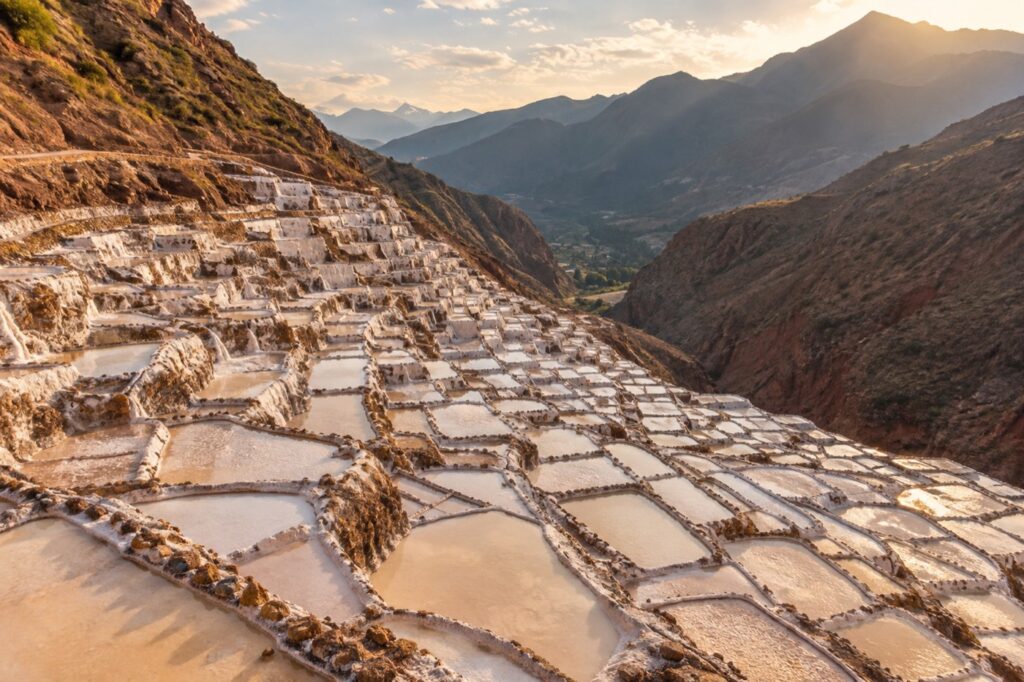
The Maras salt ponds are a patchwork of over 3,000 pools carved into the hillside, in continuous use since pre-Inca times thanks to a natural saltwater spring that still feeds them today. Local families continue to work the salt by hand, and walking among the pools in the afternoon, when the light hits from the side, gives you the valley’s best photos.
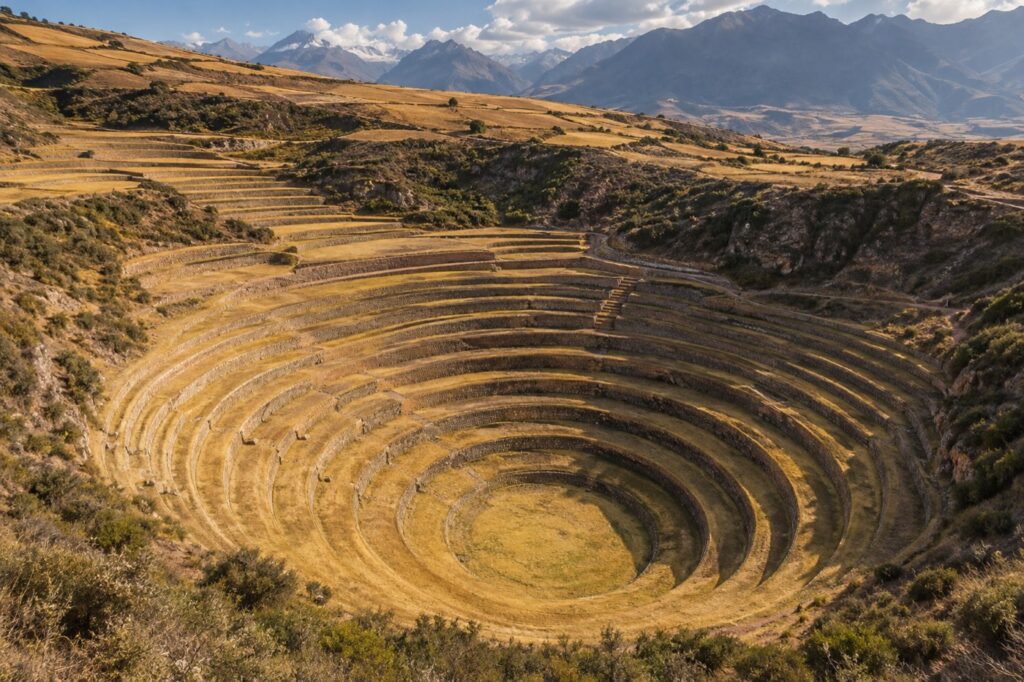
A few minutes away sits Moray, a set of stepped circular depressions forming stone amphitheaters up to 30 meters deep. It’s believed the Incas used them as an agricultural laboratory: the temperature difference between the top and bottom terrace of each circle can exceed 5°C, which would have let them experiment with crops from different ecological zones in a single spot. It remains one of Peru’s most intriguing Inca sites.
Quick comparison of the 5 sites
| Site | Approx. altitude | Recommended time | Highlight |
|---|---|---|---|
| Pisac | ~2,970 m | 1.5-2 h | Ruins + craft market |
| Ollantaytambo | ~2,790 m | 1.5-2 h | Fortress and living Inca town |
| Chinchero | ~3,700 m | 45 min-1 h | Traditional textile workshops |
| Maras (salt ponds) | ~3,380 m | 1 h | Terraced salt pools |
| Moray | ~3,500 m | 45 min-1 h | Circular agricultural terraces |
One day or two days in the Sacred Valley?
- One day (traditional tour): the classic circuit covers Pisac in the morning, a buffet lunch in Urubamba and Ollantaytambo in the afternoon, with hotel pickup and return to Cusco. It’s the most popular option if you’re short on time or catching the train to Machu Picchu from Ollantaytambo that same evening.
- Two days or more (at your own pace): lets you add Maras, Moray and Chinchero without rushing, sleep in Urubamba or Ollantaytambo itself, and reach the train station more rested. Recommended if you’re into photography, textile crafts, or simply prefer an unhurried pace.
Tourist ticket and getting around
Pisac, Ollantaytambo, Chinchero and Moray are covered by the Cusco Tourist Ticket (BTC), which also grants access to several sites in the city itself. The Maras salt ponds charge a separate entrance fee, independent of the BTC. You can get between towns on your own by shared van, but coordinating schedules and routes separately eats up time; most travelers prefer an organized tour with private transport, a guide and the logistics handled end to end.
We run the Sacred Valley in two formats: our Traditional Sacred Valley tour in a shared group, covering Pisac, Urubamba and Ollantaytambo, and the Sacred Valley VIP in a private vehicle with a flexible schedule, ideal if you want to add Chinchero or spend more time photographing the salt ponds. You can also book Maras and Moray as a standalone excursion. Message us on WhatsApp and we’ll build the itinerary around your days in Cusco.
 Project Zion™ Theme.
