


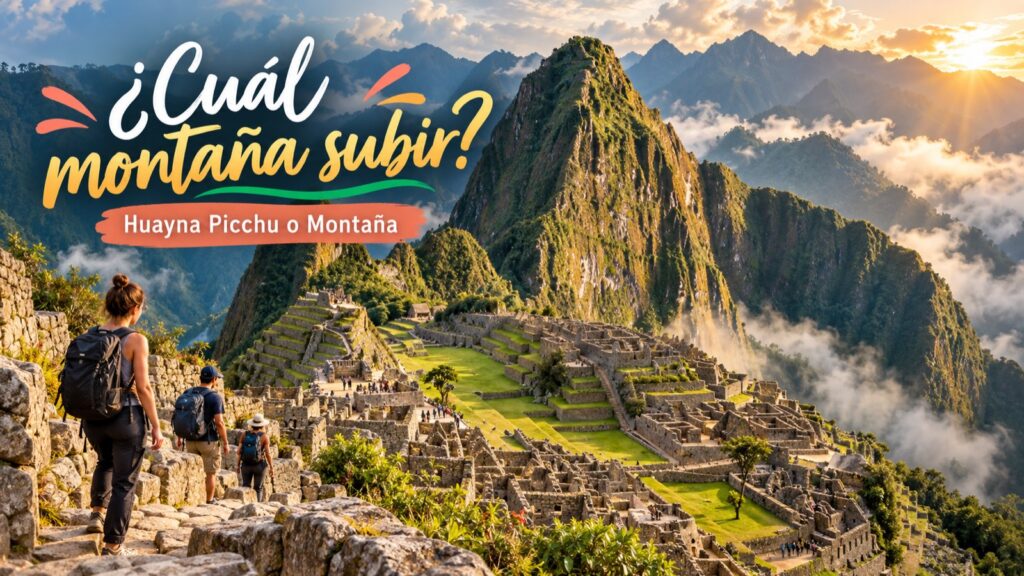
Quick answer: Huayna Picchu (2,720 m) is the short, steep climb — 45 to 60 minutes on narrow stairways, real exposure to heights, and only about 450 daily spots — that rewards you with the classic postcard view of the citadel from above. Machu Picchu Mountain (3,082 m) is taller but more approachable: 1.5 to 2 hours on a wide trail, friendlier for families, with a panoramic view of the whole valley. If you’re afraid of heights or short on time, choose the Mountain; if you want the iconic photo and booked months ahead, climb Huayna Picchu.
Two mountains, one combined ticket
Both mountains surround the Machu Picchu citadel and can only be visited with a combined ticket — there’s no “all-inclusive” pass that lets you decide on the day. You must choose which one to climb in advance, since each has its own daily quota, price, and entry time. You cannot buy both on the same day or climb both during the same visit: Peru’s Ministry of Culture treats them as separate excursions inside the archaeological park.
Before booking your flight or train, it helps to understand the real difference between the two — it’s not just about altitude, it changes the physical demand, the type of view you get, and even how far ahead you need to book.
Huayna Picchu: the iconic, demanding climb
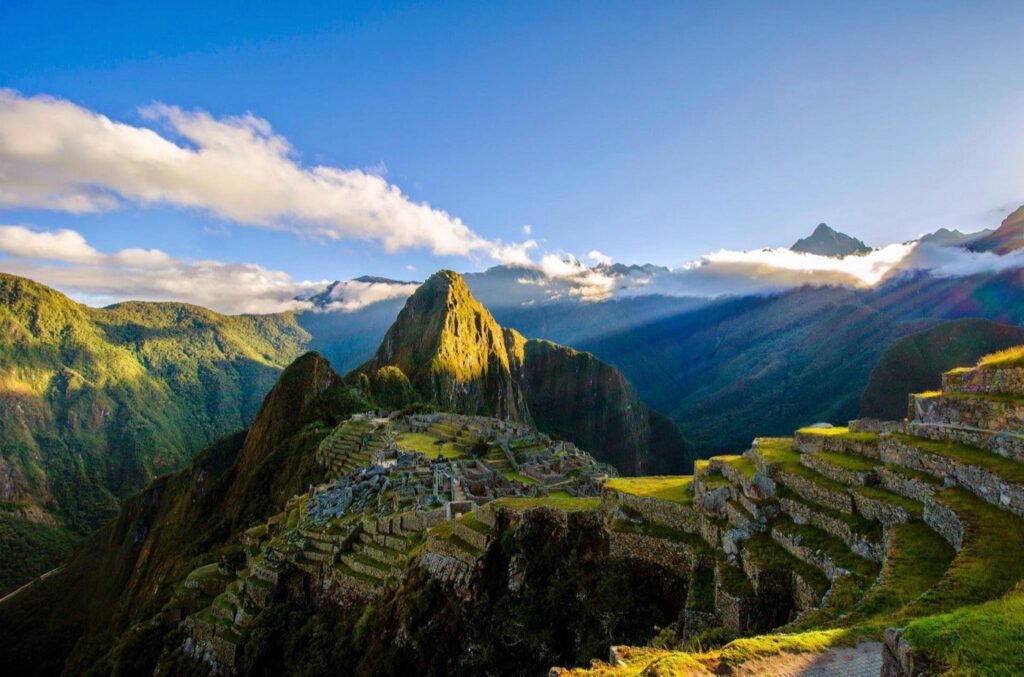
Huayna Picchu is the pointed peak that appears behind the citadel in nearly every Machu Picchu photo. Climbing it takes 45 minutes to an hour on a trail of narrow, very steep Inca stairways carved directly into the rock, with sections where you steady yourself on ropes or metal chains. It’s not technical and needs no special gear, but it demands good physical condition, grippy footwear, and no severe fear of heights: some sections drop off sharply at the sides without continuous railings.
- Summit altitude: ~2,720 meters above sea level.
- Duration: 45-60 minutes up, a similar time down; plan for 2 to 2.5 hours total including time at the top.
- Difficulty: high due to the slope and narrow stairs, not the distance (it’s short).
- Daily quota: roughly 450 visitors, split into two morning entry slots.
- The reward: Peru’s most photographed view, looking down over the entire citadel and the Urubamba river canyon.
Huayna Picchu is not recommended for young children, people with significant fear of heights, or anyone with mobility limitations. If you’re traveling with older adults or young kids, the next option is usually the better call.
Machu Picchu Mountain: higher, more accessible
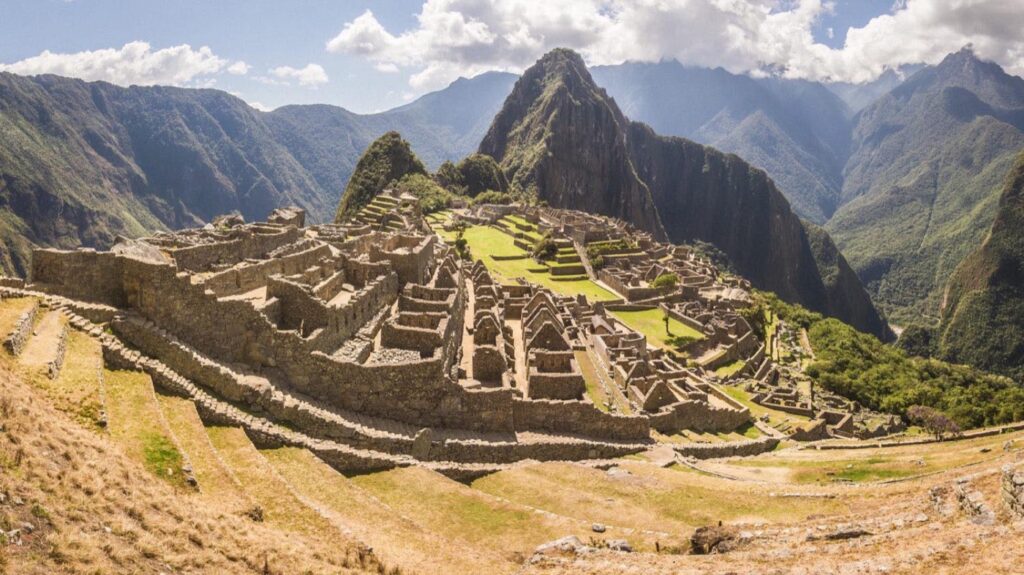
Despite its confusing name for first-time travelers, Machu Picchu Mountain is actually taller than Huayna Picchu — its summit reaches about 3,082 meters. Even so, the climb is noticeably friendlier because the trail is wide, with regular stone steps and none of Huayna Picchu’s rope sections or exposed drop-offs.
- Summit altitude: ~3,082 meters above sea level.
- Duration: 1.5 to 2 hours up; a 3 to 4-hour round trip with breaks.
- Difficulty: moderate — it demands cardiovascular stamina due to length, but the trail is safe and suits a wider range of travelers.
- Daily quota: larger than Huayna Picchu’s, with more flexible morning slots.
- The reward: a 360° panoramic view with the whole citadel, Huayna Picchu straight ahead, and the snow-capped range in the distance.
This is the option we recommend for families with teens, travelers with moderate fear of heights, and anyone who simply prefers a longer walk without the risk of severe exposure.
Side-by-side comparison
| Huayna Picchu | Machu Picchu Mountain | |
|---|---|---|
| Summit altitude | ~2,720 m | ~3,082 m |
| Climb duration | 45-60 min | 1.5-2 h |
| Trail type | Narrow stairs, ropes | Wide trail, regular steps |
| Height-fear friendly | Not recommended | Generally yes |
| Family friendly | Older kids, with care | More flexible |
| Approx. daily quota | ~450 | Larger, more availability |
| Main view | Citadel from above (classic) | 360° panorama of the valley |
Quota, price, and how to book
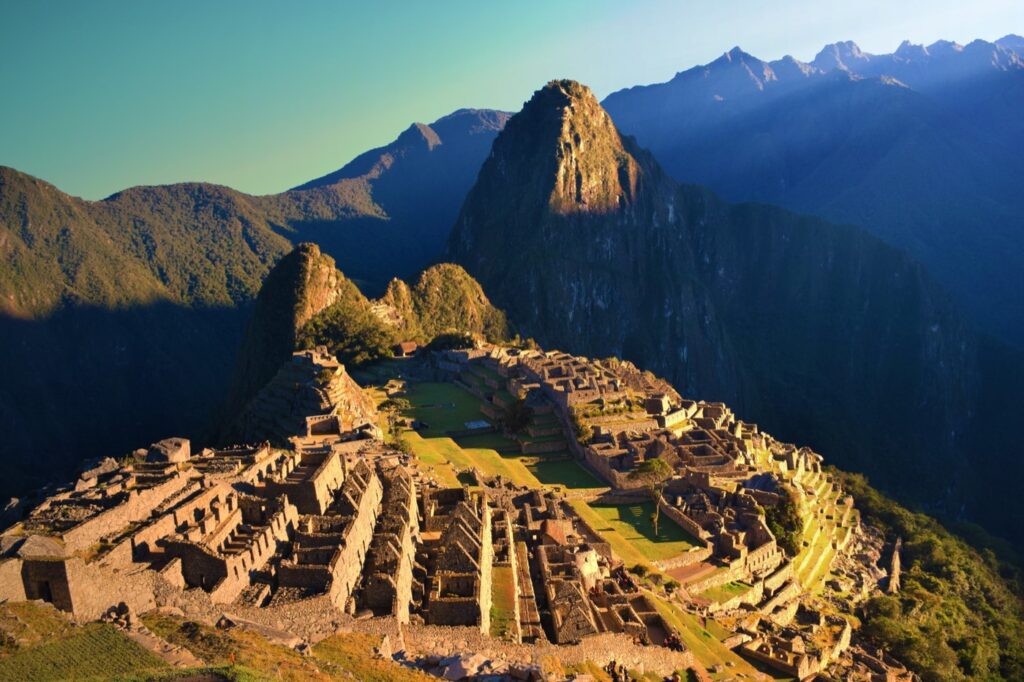
Both mountains are sold as a ticket combined with Machu Picchu (there’s no separate ticket): the general price for foreign adults is around S/ 200 (~US$ 53) for either variant, with a reduced rate for children. The ticket includes citadel entry via Circuit 3 plus access to the chosen mountain trail during a fixed time slot, generally between 7:00 and 10:00 am.
- Decide on the mountain first. You can’t change your mind on the day — the ticket specifies which one you climb.
- Buy at tuboleto.cultura.pe or through an authorized agency, with each visitor’s passport (tickets are nominal).
- Book ahead: Huayna Picchu, 2 to 3 months ahead in high season (May to September); Machu Picchu Mountain usually has more availability, but 3 to 4 weeks ahead is still wise.
- Arrive early on the day: access control for the mountain is strict about the assigned time slot, and late entry outside your turn isn’t allowed.
Which one fits your travel style?
- Want the iconic photo and you’re in good shape: Huayna Picchu, booked months ahead.
- Traveling with family or uneasy with heights: Machu Picchu Mountain, for its safer, wider trail.
- Short on time or arrived without a mountain reservation: visit just the citadel on the classic Circuit 2, no mountain climb — still a complete experience.
- Want the logistics handled for you: an organized tour helps you book the right ticket, train, and transport with enough lead time.
Practical tips for climb day
- Hydrate and eat a light breakfast: the effort feels harder at this altitude; bring at least 1 liter of water and energy snacks, since there are no vendors along the trail.
- Wear closed shoes with good grip: sandals or smooth-soled sneakers aren’t safe on either mountain, especially on wet ground during the rainy season (November to March).
- Acclimatize in Cusco first: spend at least 1 to 2 days in Cusco or the Sacred Valley before the climb to lower the risk of altitude sickness, since both mountains add physical effort on top of the area’s already high elevation.
- Respect your assigned time slot: both Huayna Picchu and the Mountain have park ranger checkpoints that verify your ticket and entry time; arriving late can mean losing your spot.
- Bring a rain poncho and sunscreen: weather changes fast in this cloud-forest zone, and you can go from bright sun to drizzle within minutes.
Still deciding, or want advice based on your fitness and travel dates? Check our full-day Machu Picchu tour or our Classic Inca Trail, which reaches the citadel through the Sun Gate. You can also message us on WhatsApp and we’ll help you choose and book the right mountain before spots run out.
 Project Zion™ Theme.
