


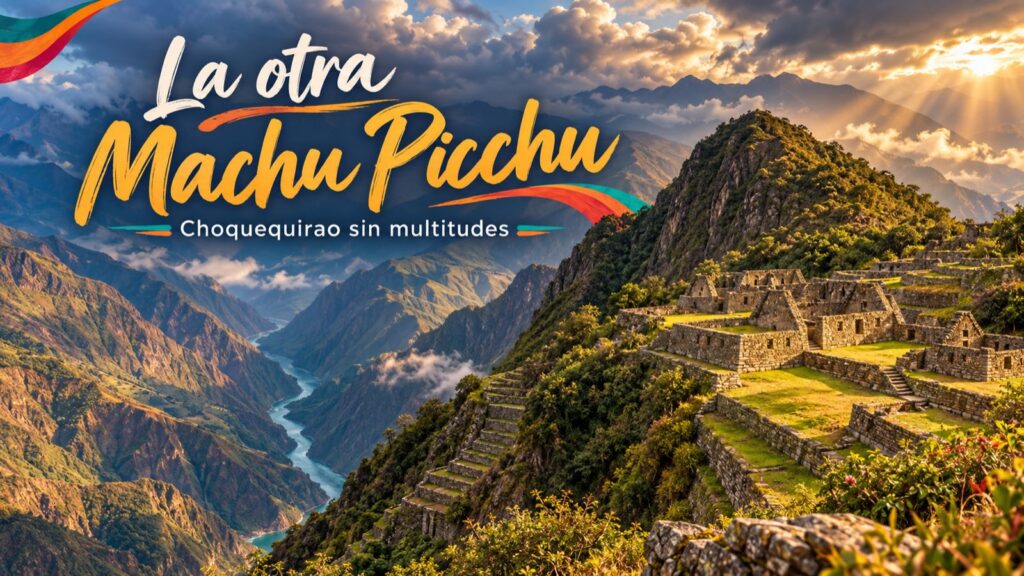
Quick answer: Choquequirao is an Inca citadel in the Cusco region, often called Machu Picchu’s “sacred sister,” with only about ~30% of its structures excavated. It is reachable exclusively on foot: 4 to 5 days round trip, crossing the Apurimac canyon, with no trains or roads. That is exactly what keeps it crowd-free — it receives under ~5% of Machu Picchu’s annual visitors.
What is Choquequirao, and why compare it to Machu Picchu?
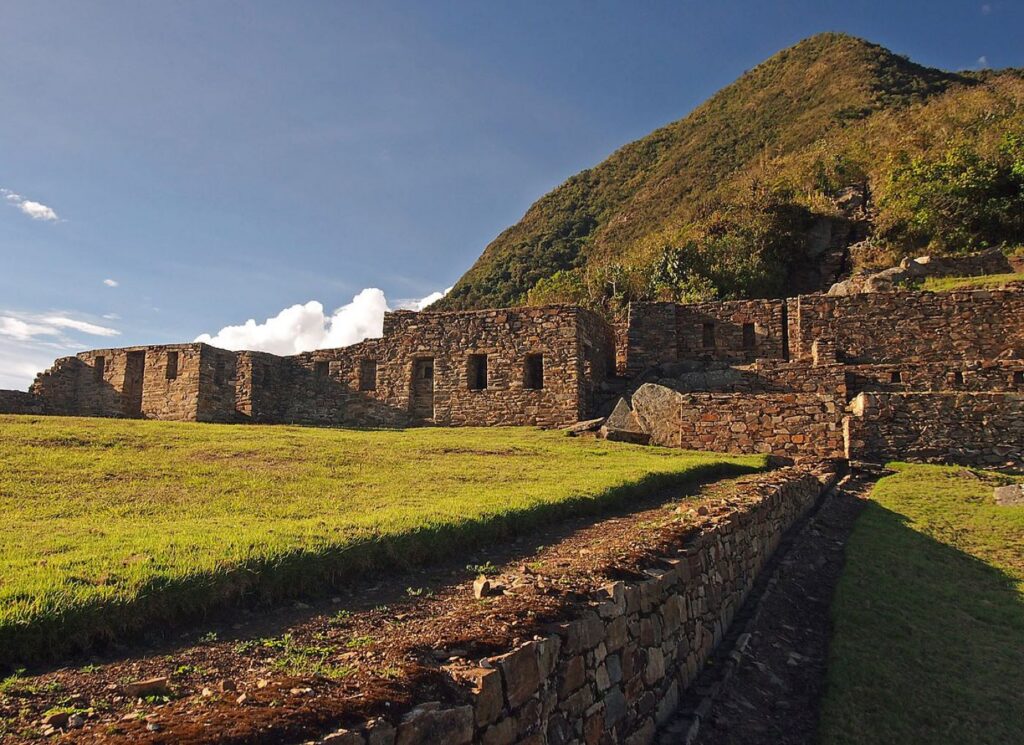
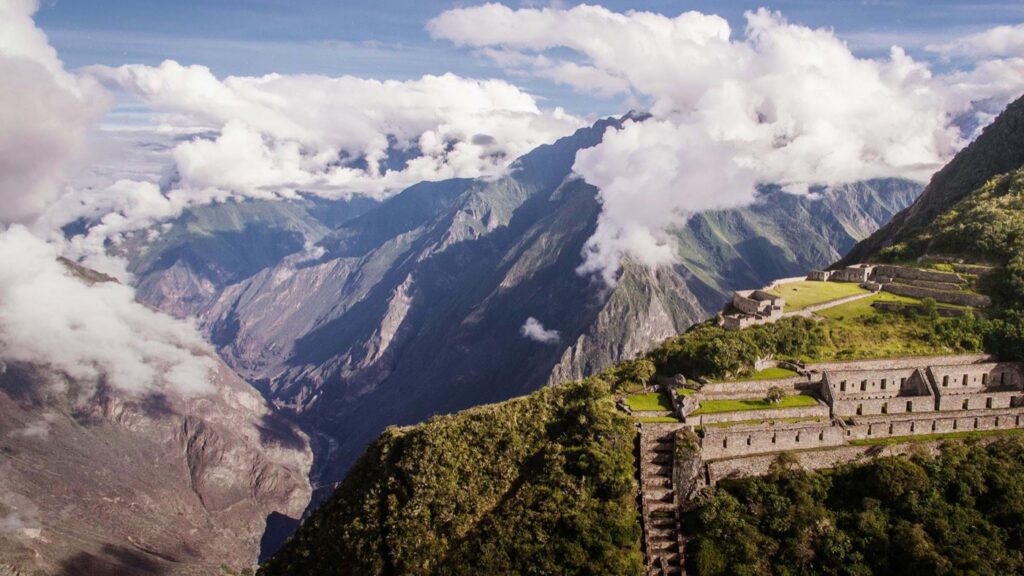
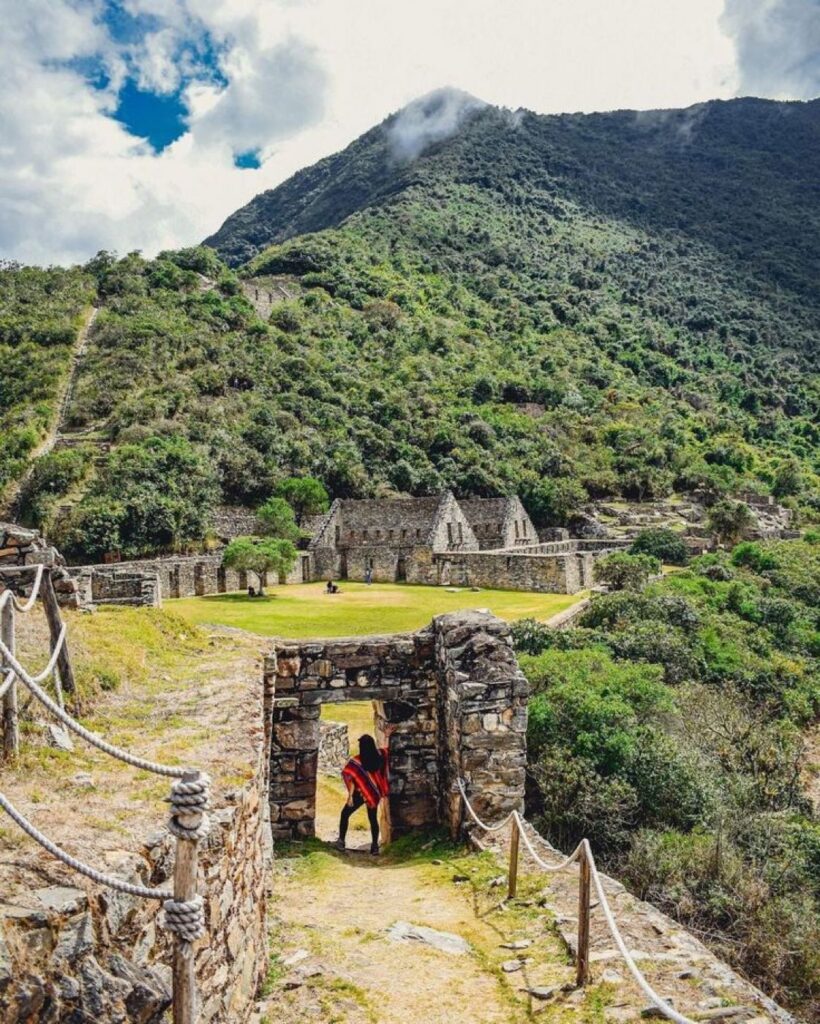
Choquequirao (“cradle of gold” in Quechua) was an Inca administrative and ceremonial center built along a ridge at roughly ~3,000 meters of elevation, overlooking the Apurimac river valley. It shares with Machu Picchu the same terraced architecture, stone-carved water channels, and a deliberately remote setting meant for ritual isolation. The difference is its state of preservation: archaeologists estimate only about a third of the site has been excavated and cleared of vegetation, so a large part of the citadel still sits under high-altitude jungle, awaiting future excavation campaigns.
Why almost no one goes: the access barrier
There is no road or train to Choquequirao. The only way in is on foot (or by horse/mule on some stretches), along a trail that drops to the bottom of the Apurimac canyon and climbs back up the other side. That physical demand, combined with the lack of mass-transport infrastructure, is precisely what has protected the site from the overcrowding Machu Picchu faces. While Machu Picchu welcomes thousands of visitors daily, Choquequirao usually has a handful of small groups sharing the site on any given day.
- No road access: the usual starting point is Cachora, a village roughly ~4 hours by car from Cusco; from there it’s all on foot.
- No services on the trail: water, food, and campsites depend on what your group carries, aside from a Ministry of Culture checkpoint and a few small local businesses.
- Cable car project under discussion: a cable car that would shrink the trip to minutes has been debated for years, but until it is operational, hiking remains the only way in.
The real difficulty: descending and climbing ~1,500 meters
The Choquequirao trek has a demanding reputation, and the reason is simple: reaching it requires descending about 1,500 meters from Cachora to the Apurimac river, then climbing a similar elevation back up to the citadel. That descend-then-climb pattern repeats on the way back, adding up to thousands of meters of accumulated elevation change over a few days. It is not a technical climb and needs no mountaineering gear, but it does demand medium-to-high fitness and several hours of daily walking under strong sun in the lower canyon sections.
| Aspect | Choquequirao (4-5 days) |
|---|---|
| Approximate accumulated elevation change | ~3,000 m round trip |
| Trail altitude range | ~1,500 to ~3,100 masl |
| Approximate distance | ~60-64 km round trip (without the MP extension) |
| Crowds on site | Low: small groups, no hourly capacity control |
| Services on the trail | Very limited: spring water, basic campsites |
Best time to go
The dry season (roughly May through September) offers the most stable trails and lower risk of rain on the descent sections, which turn slippery when wet. June through August sees the most demand, though “most demand” in Choquequirao is still modest compared to any season at Machu Picchu. The rainy season (roughly December through March) is possible but less advisable: fog often hides the canyon views, and the trails become more demanding.
What an organized trek includes
Given the logistics involved — campsites, mule handlers, multi-day food supply — most travelers choose an organized trek rather than going independently. A typical 4-to-5-day package usually includes:
- Ground transport Cusco-Cachora-Cusco (or an equivalent starting point).
- A bilingual professional guide for the full route.
- Camping gear: tents, sleeping pads, and a dining tent.
- Full meals (breakfast, lunch, dinner, and snacks) prepared along the way.
- Mule handlers and pack animals for the heavy gear.
- Entrance fee to the Choquequirao archaeological site.
What is usually not included: a personal sleeping bag (rentable), trekking poles, tips for the support crew, and extra drinks at the campsites. Packing enough sun protection and warm layers matters — the canyon can swing from intense daytime heat to sharp nighttime cold at altitude.
The Choquequirao → Machu Picchu combination in 7-8 days
For travelers who want to go beyond the classic trek, there is a route linking both sites: starting from Choquequirao, the trail continues through Andean valleys and mountain passes until it reaches the Machu Picchu area, closing the loop with a visit to Peru’s most famous citadel. It is an expedition of roughly 7 to 8 days, built for travelers with solid fitness and enough time available, offering the perfect contrast: first the solitude and mystery of a site that is only ~30% excavated, then the consolidated grandeur of Machu Picchu.
If you’re after that full combination, our Choquequirao Trek and Machu Picchu covers both sites with camping logistics and a guide included. If you’d rather do a shorter trip focused only on Choquequirao, check the Short Choquequirao Trek. To sort out dates, the fitness level required, or a custom itinerary, message us on WhatsApp at +51 922 274 872.
 Project Zion™ Theme.
