


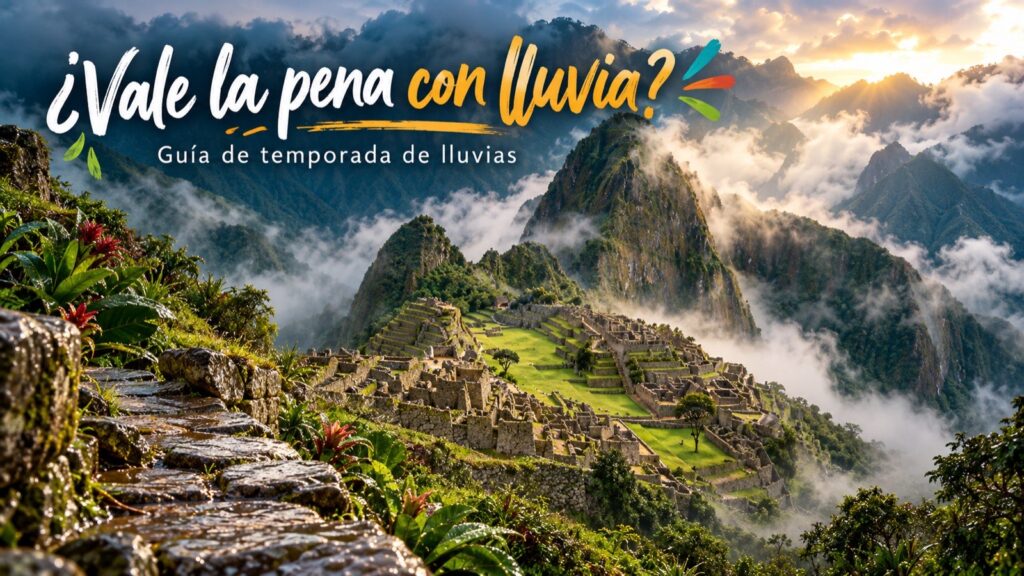
Quick answer: yes, it’s worth it. Between November and March it doesn’t rain all day — showers last one to three hours, usually in the afternoon, leaving the citadel wrapped in mist with much greener terraces than in dry season. In exchange you get fewer crowds, lower prices on hotels and tours, and photos that look nothing like the standard postcard shot. The one truly different month is February, when the classic Inca Trail closes for maintenance.
What the rainy season is really like
The image many travelers carry — nonstop torrential rain, trails turned to mud, zero visibility — doesn’t match what actually happens on most days between November and March. The typical Andean pattern in these months is clear or lightly misty mornings, skies building through mid-morning, and a downpour of one to three hours in the afternoon, often with thunder. Then it clears up, sometimes with sun before sunset.
That means most citadel visits — especially if you enter on the first morning slot — happen dry or with light drizzle. What does change completely is the landscape: vegetation explodes, the terraces and stone walls turn a saturated green that simply doesn’t exist in July or August, and it’s common to watch the citadel emerge gradually from banks of fog drifting across the surrounding peaks. For photography, this is by far the most cinematic season of the year.
Month by month: what to expect from November to March
- November: transition season. It rains some days, but there are still long stretches of clear sky. One of the least crowded months of the year.
- December: rain becomes more frequent, almost always in the afternoon. Cusco fills up a bit for the holidays, but Machu Picchu itself stays quiet.
- January: steady but manageable rain, with mornings that are often clear. One of the lowest-visitor months of the year at the citadel.
- February: the rainiest month and the only one with a scheduled closure: the classic Inca Trail does not operate due to route maintenance.
- March: rain starts to space out toward the end of the month, the green is still intense, and visitor numbers remain low compared to dry season.
February: why the Inca Trail is closed
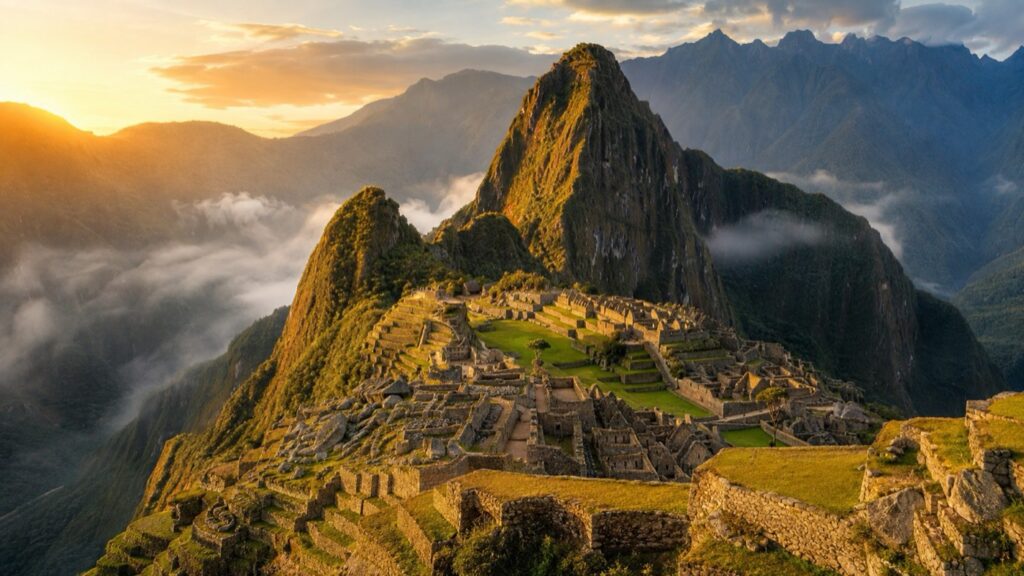
Every February, Peru’s Ministry of Culture closes the classic 4-day Inca Trail (and its 2-day variants) for the entire month for maintenance and cleanup of the route, worn down by high-season traffic and by the rains themselves. It is not a partial closure or something that depends on that year’s weather — it happens every single year without exception, so if hiking the Inca Trail is your one non-negotiable goal, avoid scheduling your trip in February.
The good news is that Machu Picchu as a destination stays open as usual, and so does the train route. If February is your only available date, the logical alternative is to arrive by train from Ollantaytambo or Poroy and pair it with a trek that runs year-round, such as the Salkantay Trek to Machu Picchu, which reaches the citadel via a different route and doesn’t depend on the Inca Trail closure.
Real risks (and why they’re not a reason to cancel)
Being honest also means naming what can go wrong. Occasionally, intense and sustained rain causes the Vilcanota/Urubamba river to rise or small landslides along the rail line between Ollantaytambo and Aguas Calientes, forcing PeruRail and Inca Rail to delay or reschedule departures by a few hours. Dense fog can also reduce visibility at the citadel during part of the morning. These events are the exception, not the rule — the vast majority of rainy-season days go by without major incidents — but it’s worth building a buffer day into your itinerary if your trip depends on tight connections, such as an international flight the same day you leave Machu Picchu.
The advantages almost no one mentions
The rainy season has a selling point dry season simply can’t match: fewer people. Between November and March (aside from specific dates like New Year’s), daily entry quotas at the citadel rarely sell out weeks in advance, giving you far more flexibility on dates and entry times. Hotels in Cusco, the Sacred Valley, and Aguas Calientes lower their rates, and some multi-day tours cost noticeably less than in July or August. Then there’s the scenery: waterfalls that are a thin trickle in dry season come down in full force, vegetation covers hillsides that look brown in winter, and the mist creates photo compositions that simply don’t exist in high season.
There’s also a quieter, more personal upside: with smaller crowds, guides have more room to actually explain what you’re looking at instead of rushing you along a packed circuit, and it’s far easier to find a quiet corner of the citadel for a few minutes without dozens of people in the frame. If you’ve already visited Machu Picchu once in dry season and want a different experience the second time around, the rainy season delivers a genuinely different mood — moodier light, dramatic clouds rolling over Huayna Picchu, and a sense of having the ruins mostly to yourself in the early morning.
What to pack for the rainy season
- A real waterproof jacket (not just a windbreaker) with an adjustable hood.
- A backpack rain cover or a waterproof bag for your camera and documents.
- Waterproof trekking shoes with good grip — stone paths get slippery.
- Quick-dry layers: temperatures drop fast once it clears up in the evening.
- Ziploc bags for your passport, phone, and printed tickets.
- A lightweight plastic poncho as backup — takes up no space and saves the day if your jacket soaks through.
| Month | Chance of afternoon rain | Approx. daytime temp |
|---|---|---|
| November | Moderate | ~68°F |
| December | Moderate-high | ~66°F |
| January | High | ~66°F |
| February | Very high | ~64°F |
| March | Moderate-high | ~66°F |
Why January might be a great idea
If we had to pick a single rainy-season month to recommend, it would be January. The Inca Trail is still open (unlike February), mornings usually offer a dry window before the sky builds up, prices have already dropped from mid-year high season, and the citadel sees considerably fewer visitors than in June or July. If your itinerary also gives you the flexibility to enter early and finish before the afternoon shower arrives, it’s entirely possible to get a nearly full day without rain.
For this season, the most practical option is still the train: it runs year-round and takes weather out of the equation for the longest leg of the trip. Message us on WhatsApp and we’ll set up your Machu Picchu train tour with timing built around the dry morning hours.
 Project Zion™ Theme.
