


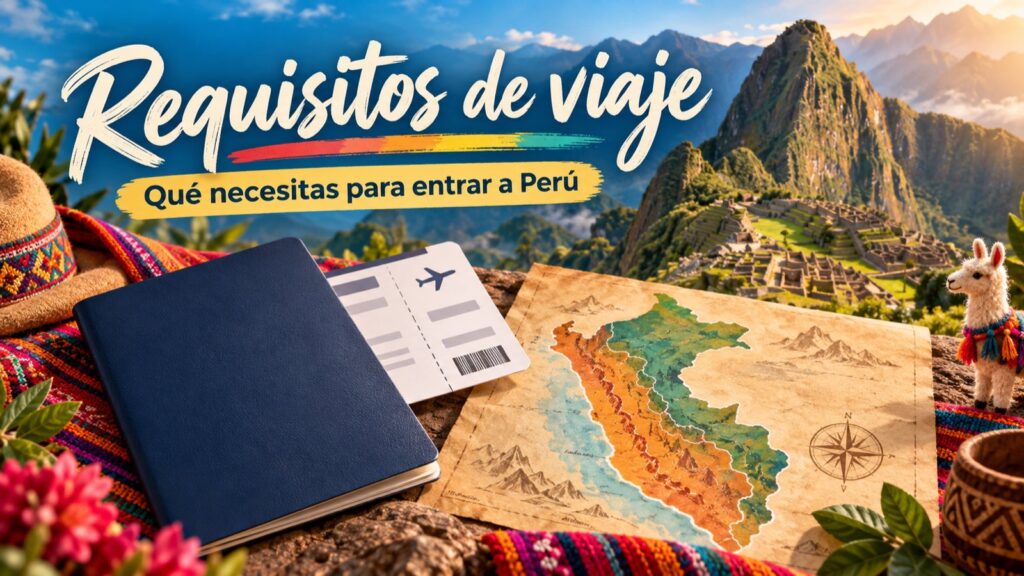
Quick answer: most nationalities (the US, Canada, the European Union, the UK, and much of Latin America) do not need a tourist visa to enter Peru and are typically granted up to ~183 days at immigration. Other nationalities (some countries in Asia, Africa, and Oceania) do need a visa in advance. The one requirement that applies to everyone is a valid passport, and sometimes proof of onward travel. This guide is informational only — always confirm with the Peruvian consulate or immigration authorities before you travel, since rules change without notice.
Peru by country blocks: who needs a visa and who doesn’t
Peru has a fairly open immigration policy for tourism: the list of visa-exempt countries is broad and covers most visitors headed to Cusco and Machu Picchu. To keep things simple, it helps to think in general blocks (this is a practical guide, not a legal list):
- United States, Canada, European Union, and United Kingdom: generally do not need a tourist visa. On arrival, immigration usually grants a permit of up to 183 calendar days, though the officer may authorize a shorter period at their discretion.
- Australia, New Zealand, and most Latin American countries: generally also exempt, but it’s worth verifying your specific case, especially if your passport isn’t from your usual country of residence.
- Some countries in Asia, Africa, and the Middle East: may require a consular visa arranged in advance, plus extra documentation (itinerary, hotel booking, proof of funds).
- Holders of a valid US, UK, EU (Schengen), or Canadian visa: in several cases can enter Peru without a separate Peruvian visa, though this benefit depends on your passport’s nationality and should be confirmed for your specific case.
The most reliable way to confirm your situation is to check the official website of Peru’s Immigration Authority or the Peruvian consulate in your country before booking flights. Requirements can shift with bilateral agreements that change year to year, and relying on outdated information — including this guide, if it’s been a while — is the most common mistake travelers make.
Documents immigration may ask for on arrival
Regardless of whether you need a visa, there’s a set of documents immigration may request at the border, whether by air (Lima airport) or by land (border crossings with Ecuador, Colombia, Bolivia, or Chile):
- A passport valid for at least 6 months from your travel date. This is the most universal requirement and the one that trips up travelers most often — many don’t check the expiration date until they’re already at check-in.
- Proof of onward or return travel. It’s not always requested, but some airlines require it before boarding, and immigration may ask for it on entry, especially for one-way tickets.
- Proof of accommodation or an itinerary, mainly for nationalities that require a visa or in random checks.
- Proof of sufficient funds (cash, card, or bank statement), rarely requested from tourists of exempt countries, but possible in specific cases.
Quick reference table by country block
| Country block | Tourist visa? | Approximate stay |
|---|---|---|
| US, Canada, EU, UK | Generally no | Up to ~183 days |
| Australia and several others | Check your specific case | Variable |
| Most of Latin America | Generally no | Up to ~183 days |
| Some Asian/African countries | Yes, check with consulate | Depends on visa granted |
This table is a simplification to help you get oriented quickly, not a legal document. Immigration policy is reviewed periodically, and a country can move from “exempt” to “visa required” (or the other way around) due to a bilateral agreement change. Always confirm with an official source before you travel, never solely from a blog guide, no matter how current it looks.

Practical tips before you travel
- Check your passport’s expiration date as soon as you start planning, not the last week. Renewals can take weeks in some countries.
- Keep digital and physical copies of your passport, flight itinerary, and hotel booking in case immigration or the airline asks for them.
- If your nationality requires a visa, start the process at the Peruvian consulate several weeks in advance — processing times vary widely by country.
- A tourist permit is not a study, work, or business visa: if your trip combines tourism with another activity, check whether you need a different permit.
- Note your tourist permit’s expiration date when you enter — overstaying results in a fine on departure.
Can I extend my tourist permit once I’m in Peru?
If you were granted fewer than the maximum ~183 days on arrival, in some cases it’s possible to request an extension of your tourist permit directly with Immigration while inside Peru, always before the original deadline expires. The process has a fee, requires your passport and the corresponding form, and isn’t guaranteed — the officer evaluates each request individually. Don’t leave this for the last day, since Immigration offices have limited hours and can have lines during high season. If you’re planning to stay longer than usually authorized, it’s simpler to plan for it from the start and mention it on arrival, or check in advance with the Peruvian consulate in your home country.
Also keep in mind that overstaying your permit without regularizing it generates a migratory fine proportional to the number of extra days, paid on departure. The fine doesn’t usually prevent you from leaving, but it does slow down the process at the airport or border crossing, so it’s worth calculating your itinerary dates carefully, especially if you’re combining Peru with other countries in the region on the same trip.
Minors and special cases
If you’re traveling with children or teenagers, check the specific requirements for minors as well: in some cases Immigration or the airline requires notarized authorization when a minor travels with only one parent, with a guardian, or without either parent. This requirement varies depending on the minor’s passport-issuing country and doesn’t depend solely on Peruvian rules, so it’s worth confirming with both the Peruvian consulate and the airline before booking flights. Likewise, if you hold dual nationality, use the same passport for the whole trip (entry, accommodation, and exit) to avoid inconsistencies in immigration records.
Have a question specific to your case?
Every nationality, passport type, and travel purpose is different, and immigration policy changes over time. We can’t give you legal certainty about your particular situation — that’s what the Peruvian consulate in your country or the official Immigration website is for. What we can help with is planning your itinerary once your entry is sorted: if you’ve already confirmed your requirements and want to organize your route through Cusco, the Sacred Valley, and Machu Picchu, check out our Cusco city tour or our Lima city tour, or message us on WhatsApp and we’ll help sort out any logistics for your trip.
 Project Zion™ Theme.
