


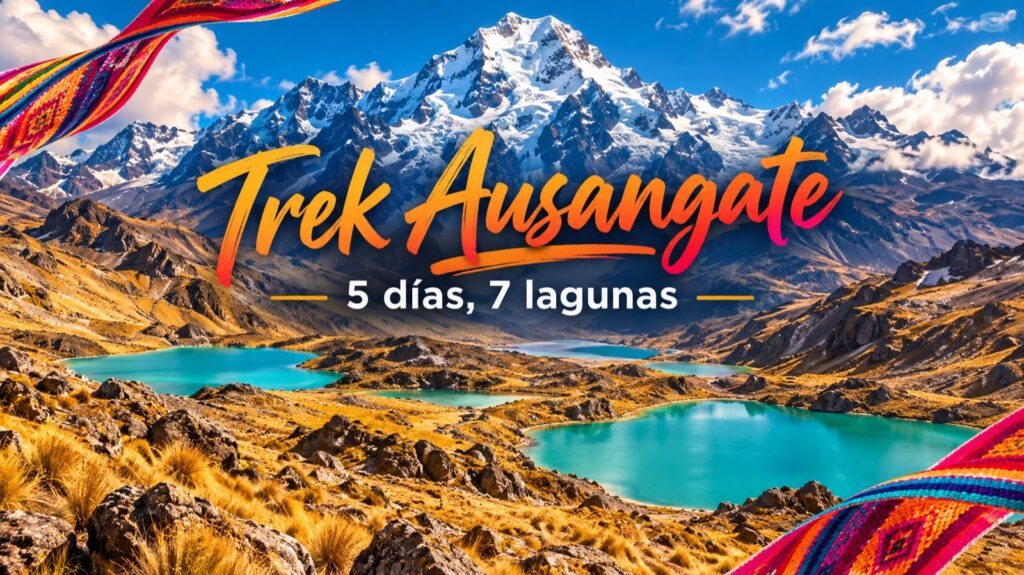
Quick answer: the 5-day Ausangate trek circles the ~6,384 m Ausangate snow-capped peak (you walk around it, not up it) past its ~7 turquoise glacial lagoons, crosses several passes above 4,800 m, and usually adds Rainbow Mountain (Vinicunca) at the start or end of the route. It is a high-difficulty trek meant for hikers with prior high-altitude experience; the best months run from April to October.
Why the Ausangate trek is different from other Cusco treks
Ausangate is the tallest snow-capped mountain in the Cusco region and one of the most revered apu (sacred mountains) in the Peruvian Andes. Unlike the Inca Trail or Salkantay, this circuit has no Inca ruins as its centerpiece — its appeal is purely geographic and spiritual. You spend several days circling the massif through high Andean valleys still inhabited by alpaca and llama herding families, far from the mass-tourism circuit. Together with Choquequirao, it is one of the least crowded treks in the region despite its beauty.
Day-by-day itinerary
- Day 1 — Tinki/Upis to Pukacocha: early departure from Cusco by road (~3-4 h) to the trailhead. A short acclimatization hike passing natural hot springs; camp with a direct view of the snow-capped peak.
- Day 2 — Pukacocha to Anantapata (Arapa crossing): the toughest stage, including the highest pass of the whole trek, above 5,000 m on some route variants. You start seeing the first turquoise and emerald lagoons here.
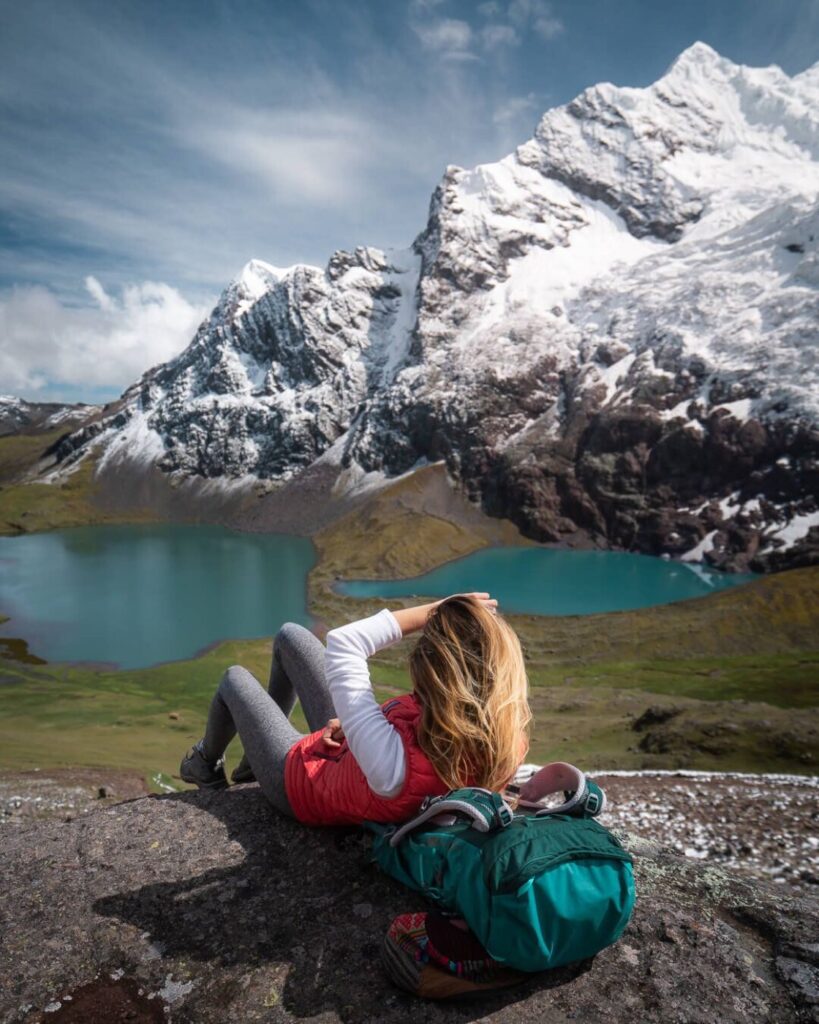
- Day 3 — Anantapata to Jampa: panoramic views of the massif’s southern side, a second pass above 4,800 m, and more glacial lagoons. Usually the most photogenic day.
- Day 4 — Jampa to Pacchanta: descent toward herding communities, with an optional soak in hot springs before finishing the hike; overnight in Pacchanta or transfer back to Cusco depending on the operator.
- Day 5 — Rainbow Mountain (Vinicunca): many operators close the circuit with a Rainbow Mountain visit before heading back to Cusco, since the area sits relatively close to Pacchanta. Others include it on day 1 instead.
The exact order varies by agency and trail conditions, but the 4-day-circuit-plus-Rainbow-Mountain structure holds for most 5-day itineraries.
The ~7 lagoons and the peak you don’t climb
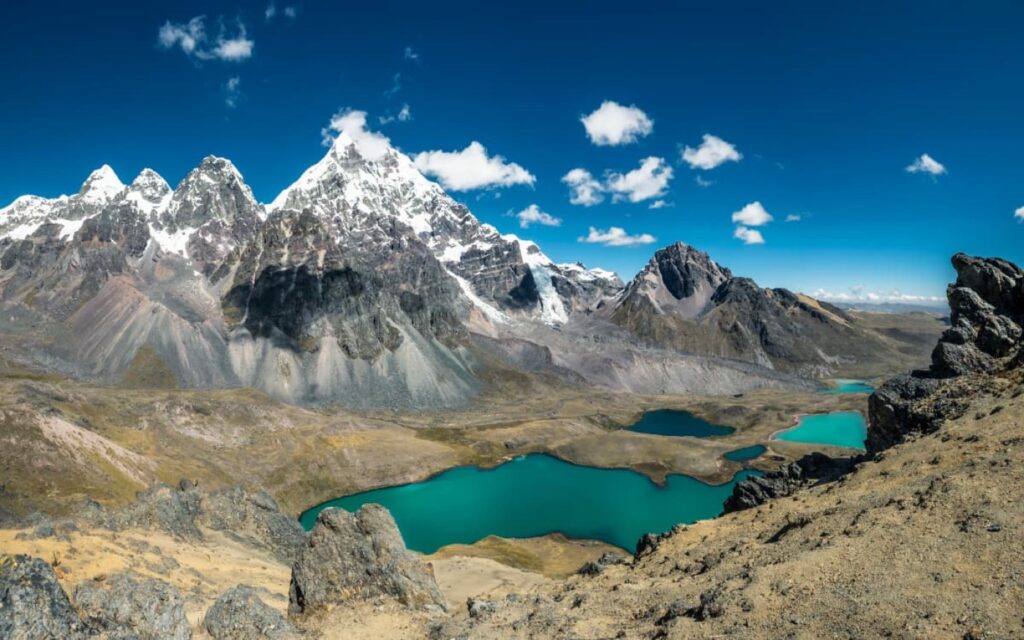
The full circuit skirts a series of lagoons fed by Ausangate’s glaciers, each a different shade of blue and turquoise depending on its depth and the glacial sediment it carries. There is no single official count — some operators count 6, others up to 8 depending on which route variant they take — but ~7 lagoons is the reference figure most agencies use.
As for the mountain itself: Ausangate stands ~6,384 m tall, and reaching its summit requires technical mountaineering gear (crampons, ropes, glacier experience) that is not part of a standard tourist trek. What this circuit does is circle the base of the massif, offering close-up views of its hanging glaciers without any climbing required.
Camps with glacier views
One of Ausangate’s biggest draws over other treks is the quality of its campsites: nearly every night you camp with the snow-capped peak as your backdrop, something that only happens at a couple of spots on the Inca Trail or Salkantay. The camp near Pukacocha, in particular, offers one of the closest glacier views of any trek in the region. Nights are cold — sub-zero temperatures are normal above 4,300 m — so a good sleeping bag (rated to -10°C or colder) is not optional.
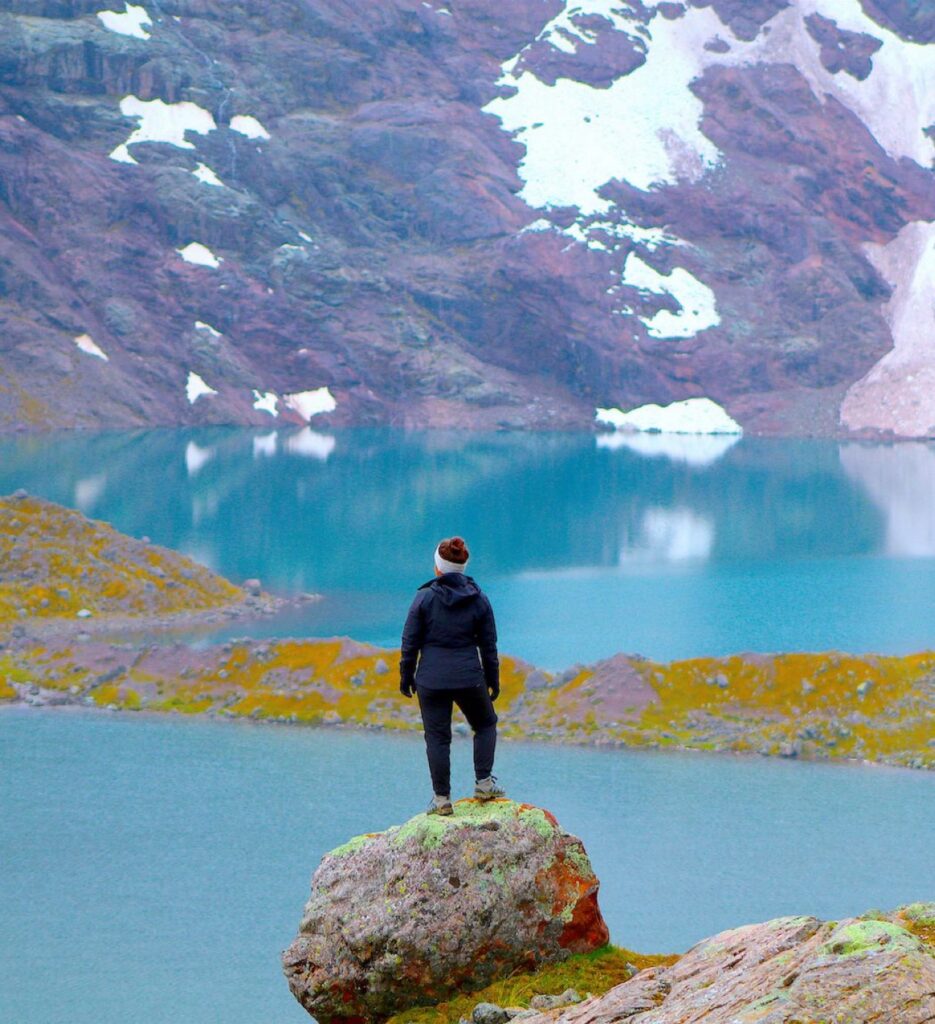
Load logistics on this trek usually fall to local horsemen with pack horses, who can also help any hiker lighten their backpack on the toughest sections. Having a local support team with experience in the area matters here: the terrain changes fast and high-mountain weather is unpredictable even in the dry season.
Difficulty: who this trek is for
Ausangate is rated a high-difficulty trek, above Salkantay and well above the classic Inca Trail. The reasons:
- Sustained altitude: nearly the entire route sits above 4,300 m, with several passes above 4,800 m.
- Less infrastructure: unlike the Inca Trail, there are no checkpoints and far fewer other groups on the trail; if something goes wrong, evacuation takes longer.
- Long hiking days: 5 to 7-hour trekking days over uneven terrain, with steep climbs at every pass crossing.
- Variable weather: rain, hail and strong wind can hit even in the dry season, especially in the afternoons.
For these reasons, we recommend Ausangate to hikers with prior high-altitude trekking experience (Salkantay, Choquequirao or similar) and good fitness — not as a first trek in the Andes. If this would be your first high-altitude experience in Peru, start with a shorter trek or spend a couple of extra days acclimatizing in Cusco first.
Best time for the Ausangate trek
| Season | Months | Conditions |
|---|---|---|
| Dry (recommended) | April to October | Clear skies, dry trails, very cold nights |
| Shoulder | April and October | Good visibility, occasional light rain |
| Rainy | November to March | Muddy trails, snow risk on high passes, not recommended |
June and July give you the clearest skies for photographing the lagoons and the peak, though also the coldest nights of the year. If you want fewer crowds without hitting the rainy season, April and October are a solid middle ground.
What to pack (beyond your basic trekking gear)
- Technical layered warm clothing: base layer, insulating layer (down or synthetic), and a waterproof windbreaker.
- A sleeping bag rated for sub-zero temperatures (-10°C or colder).
- Trekking poles, especially useful on the pass crossings.
- High-SPF sunscreen, UV-protection sunglasses and lip balm — sun exposure at this altitude is intense.
- Trekking boots already broken in, not new ones.
- Altitude sickness pills or coca leaves/tea, plus at least 2-3 acclimatization days in Cusco before starting.
Ausangate + Rainbow Mountain: the combination most travelers choose
Since Rainbow Mountain sits relatively close to the circuit’s start/end point, most 5-day itineraries add it as either the closing or opening day, avoiding a separate trip from Cusco. If you’d rather keep both experiences separate, it’s also perfectly possible to do Rainbow Mountain as an independent day trip before or after the trek. Check out our Classic Ausangate Trek or, if you only have one day available, the Rainbow Mountain full-day tour to see Vinicunca without the full trek.
Not sure if you’re fit enough for this trek, or want to build a custom itinerary combining Ausangate with extra days in the Sacred Valley? Message us on WhatsApp and we’ll help you plan it around your experience and dates.
 Project Zion™ Theme.
