


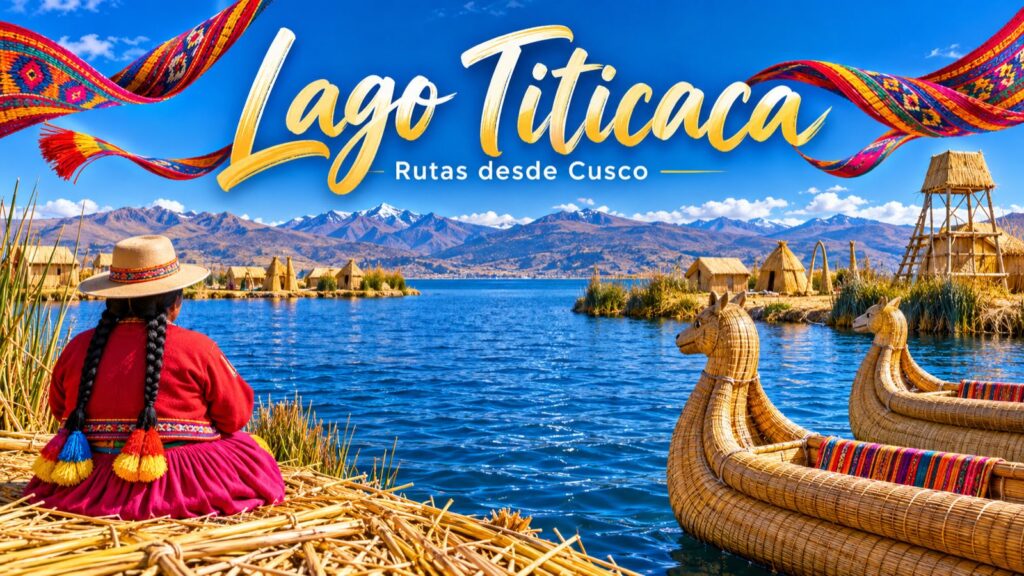
Quick answer: Cusco to Puno is ~388 km (240 mi), covered either by panoramic tourist bus (~10 hours with stops) or by flying to Juliaca (~45-minute flight plus a 1-hour transfer). From Puno you sail Lake Titicaca to visit the Uros floating islands, Amantani (community-based tourism with an overnight family stay) and Taquile. Two to three days is enough for the full experience as an extension of a Cusco and Machu Picchu trip.
How to get from Cusco to Puno
There are two practical ways to travel between Cusco and Puno, and the choice depends on how much time you have in your itinerary.
- Panoramic tourist bus (~10 hours): companies like Inka Express or Turismo Mer cover the route with photo stops along the way: La Raya (the highest pass, ~4,300 m / 14,100 ft), the Raqchi archaeological site (Temple of Wiracocha) and the Pukara lithic museum. It leaves Cusco in the morning and reaches Puno by evening. It is the recommended option if you want to enjoy the journey itself as part of the experience.
- Cusco-Juliaca flight: the airport serving Puno is in Juliaca, about a 45-minute flight from Cusco plus roughly a 1-hour land transfer to Puno. It is the fastest option if your itinerary is tight, though you miss the altiplano scenery.
A Cusco-Puno tourist train (the Belmond Andean Explorer) also exists — a luxury option priced well above the bus or the flight, designed more as an experience in itself than as a simple transfer.
The Uros floating islands
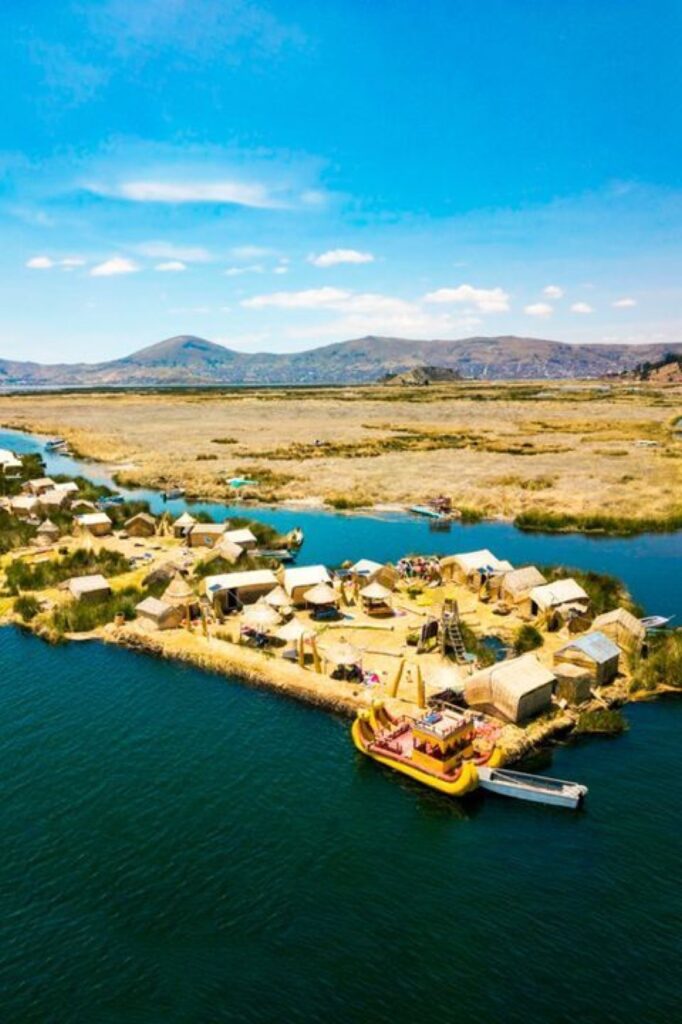
A little over half an hour by boat from Puno’s harbor sit the Uros islands, built entirely from totora, a reed that grows in the lake. Each island is home to a few families who constantly renew the totora base because it rots from below. The Uros families show how an island is assembled, sell woven handicrafts, and offer short rides on decorated totora reed boats (at an extra cost). It is a short but very photogenic stop, and it is usually the first stop on any lake tour.
Amantani: community-based tourism with local families
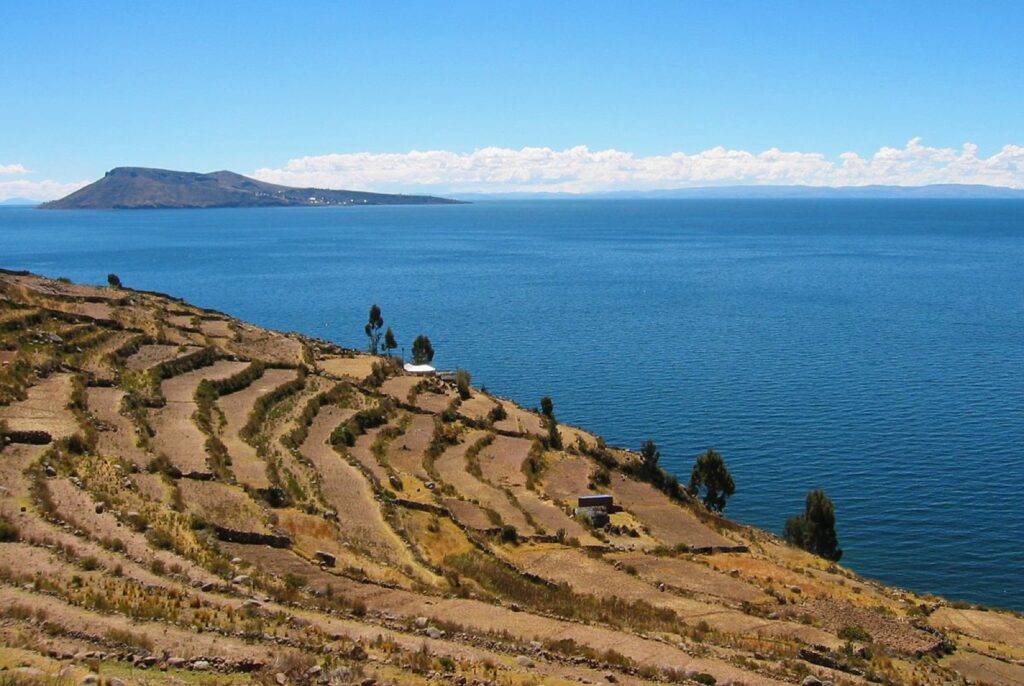
About 3-4 hours by boat from Puno, Amantani is a farming island where community-based tourism is practiced: visitors stay one night with a local family, share their meals (potatoes, quinoa, fava beans grown on the island) and, if the group wishes, join a party with traditional Andean music and dress in the evening. The island has no cars and not every house has constant electricity, and from its highest point — with two pre-Hispanic temples dedicated to Pachatata and Pachamama — you can watch the sunset over South America’s highest large lake. It is the stop that stays with visitors longest on the full 2-day, 1-night circuit.
Taquile: weaving declared a World Heritage of humanity
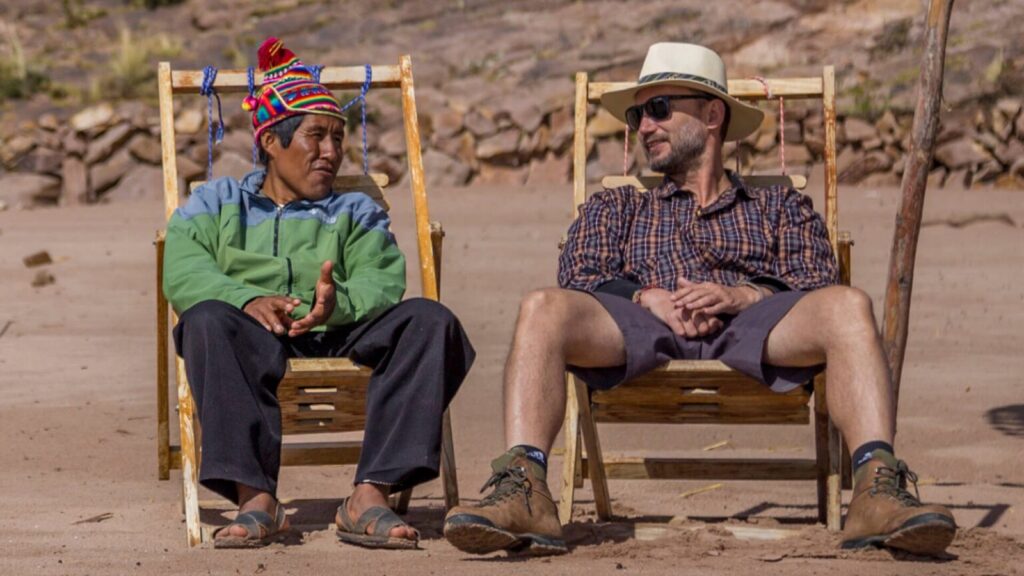
Taquile lies close to Amantani and is usually visited as a stop on the way back to Puno. It is famous for its wool weaving, so intricate that UNESCO declared it a Masterpiece of the Oral and Intangible Heritage of Humanity. On the island, it is the men who weave — unlike most Andean communities — and a person’s marital status can be read from their knitted cap (chullo): singles wear different colors than married men. A stone staircase leads up to the main square, where there is usually a weaving demonstration and direct handicraft sales with no middlemen.
How much time should you set aside for Lake Titicaca?
| Duration | What it covers | Best for |
|---|---|---|
| Full day (1 day) | Uros + Taquile, same-day return to Puno | Tight itineraries |
| 2 days / 1 night | Uros + overnight family stay on Amantani + Taquile | The most complete, recommended experience |
| 3 days | The above plus free time in Puno or a combination with Copacabana (Bolivia) | Longer trips through the southern Andes |
For most travelers, 2 to 3 days is the ideal balance: enough for the overnight community stay on Amantani without cutting too much time from the rest of your Cusco and Machu Picchu itinerary.
How to combine it with Cusco and Machu Picchu
Lake Titicaca works best as an extension of a trip that already includes Cusco, the Sacred Valley and Machu Picchu, not as a stand-alone destination. A common order is: Cusco and the Sacred Valley (2-3 days), Machu Picchu (1-2 days), then bus or flight to Puno to close the trip with the lake (2-3 days) before flying home from Juliaca or continuing into Bolivia. If you already have your Machu Picchu by train tour booked, adding the Titicaca extension is straightforward: check our 2-day, 1-night Puno, Uros, Amantani and Taquile tour or ask about a multi-day Cusco package we can extend with this route.
If your itinerary is already set and you just want to add Lake Titicaca as a last-minute extension, message us on WhatsApp: we coordinate the transfer, lodging and lake excursions without you having to rebuild your whole trip.
Want to add Lake Titicaca to your Cusco and Machu Picchu trip? Message us on WhatsApp and we’ll map out the full route: Cusco, Machu Picchu and Puno.
 Project Zion™ Theme.
