


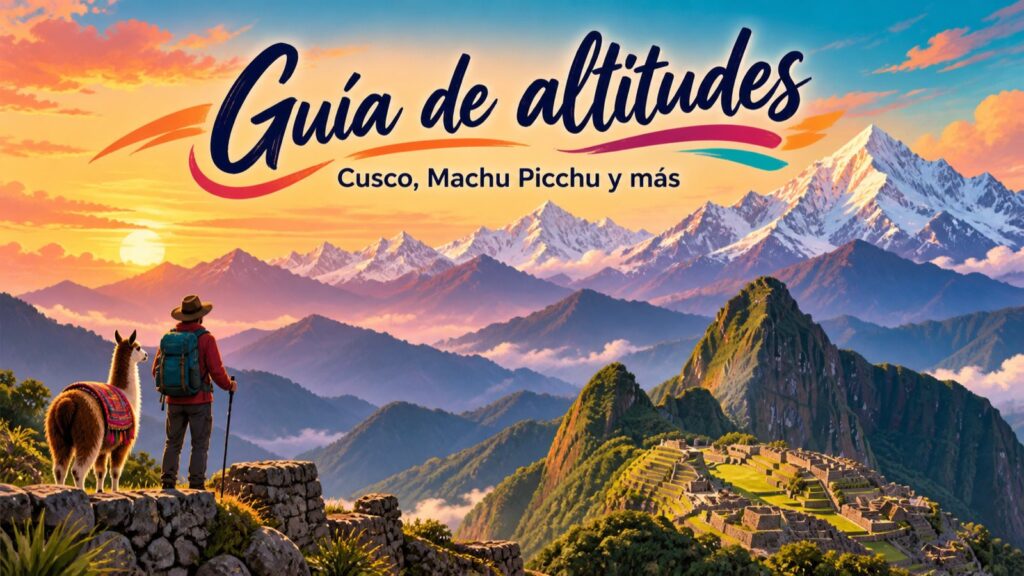
Quick answer: Machu Picchu sits at roughly 2,430 m, lower than Cusco (~3,400 m) and the Sacred Valley (~2,800 m) — which is why many travelers feel wrecked by altitude in Cusco and then breathe easier at the citadel. Rainbow Mountain (~5,036 m) and the Ausangate trek (up to ~5,000 m) are the highest points of the trip. The key is acclimatizing in Cusco or the Sacred Valley before tackling the high mountains.
Altitude comparison table: how high is each destination?
Before building your itinerary, it helps to know exactly how high each place sits. These figures are approximate — exact altitude varies depending on the precise measuring point:
| Destination | Approximate altitude | Altitude sickness risk |
|---|---|---|
| Lima | ~sea level | None |
| Sacred Valley (Urubamba, Ollantaytambo) | ~2,800 m | Low-moderate |
| Machu Picchu | ~2,430 m | Low |
| Cusco | ~3,400 m | Moderate-high |
| Ausangate (trek’s highest point) | up to ~5,000 m | High (needs prior acclimatization) |
| Rainbow Mountain (Vinicunca) | ~5,036 m | High |
Here’s the detail that surprises almost every traveler: Machu Picchu is actually the lowest destination on this list after Lima and the Sacred Valley. Most people arrive in Cusco expecting the citadel to sit “higher up” than the city — it’s actually the opposite.
Why is Machu Picchu lower than Cusco? The common myth
This is one of the most repeated misunderstandings about this trip. Cusco was the capital of the Inca Empire and sits in a high highland valley at ~3,400 m. Machu Picchu, on the other hand, was built on a mountain spur in the cloud forest, descending toward the Amazon basin — at roughly 2,430 m, nearly 1,000 meters lower than Cusco.
The confusion comes from the image: Machu Picchu looks like it’s “on top of a mountain,” surrounded by steep peaks, which suggests high altitude. But what makes the citadel look so dramatic isn’t its elevation above sea level — it’s the relative drop toward the Urubamba river canyon, hundreds of meters below. In terms of available oxygen, Machu Picchu actually feels noticeably more comfortable than Cusco: the air is denser and more humid, and there’s more vegetation — a clear sign of lower altitude.
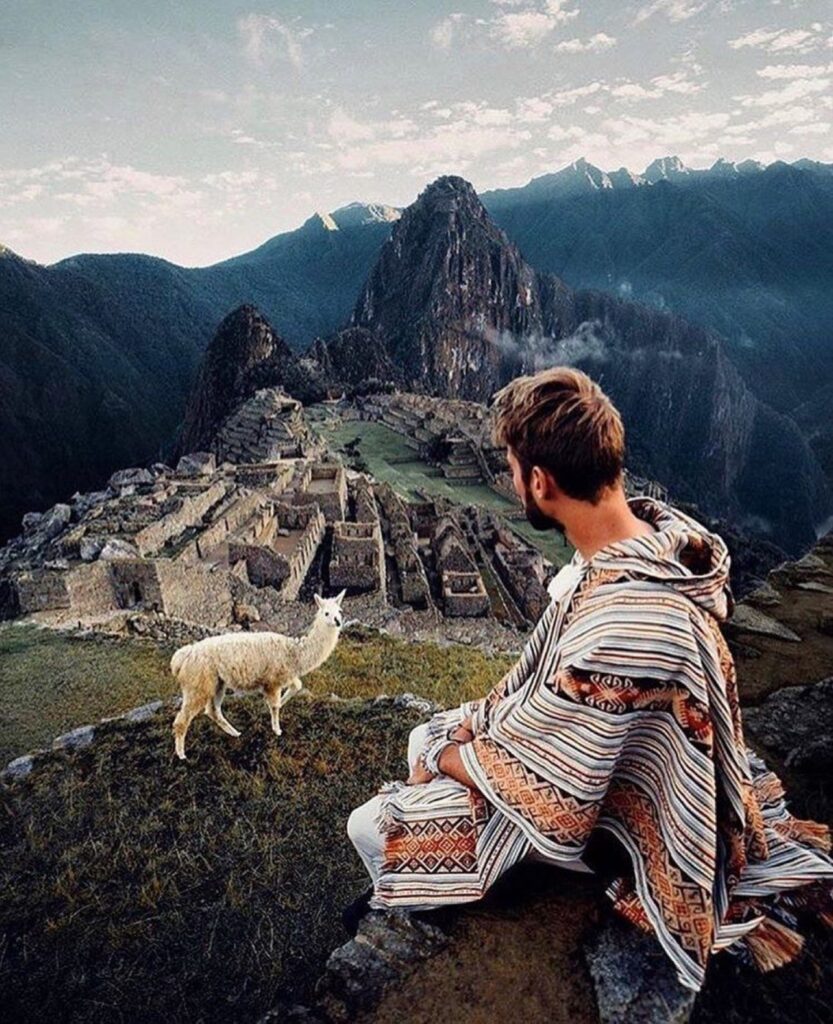
This has a very practical upside: if you arrive in Cusco with altitude symptoms, heading down to Machu Picchu or the Sacred Valley will almost always ease the discomfort rather than worsen it, because you’re literally descending in altitude.
Altitude sickness symptoms (soroche)
Altitude sickness, known locally as soroche, happens when the body hasn’t yet produced enough red blood cells to compensate for the lower oxygen pressure in the air. It usually appears between 6 and 24 hours after arriving at a significantly higher altitude than usual, and in most cases it’s mild and short-lived.
- Headache — the most common symptom, and almost always the first one to show up.
- Fatigue and shortness of breath during effort that normally costs nothing, like climbing stairs or walking uphill.
- Nausea or loss of appetite, sometimes with mild dizziness.
- Trouble sleeping the first few nights, a very typical altitude effect that usually fades by day three or four.
- More serious symptoms (shortness of breath at rest, confusion, persistent cough) are rare but require descending in altitude and seeking medical attention right away.
The vast majority of travelers only experience the milder versions above, and they improve on their own within 24 to 48 hours without special treatment.
How to prevent altitude sickness: acclimatize before you climb
The golden rule for any trip through the Peruvian Andes is simple: climb gradually and give your body time before demanding physical effort at high altitude. These are the measures that make the biggest difference:
- Spend 1 to 2 days in Cusco or the Sacred Valley before any trek or excursion above 4,500 m. The Sacred Valley, sitting roughly 600 meters lower than Cusco, is an excellent first stop for acclimatizing without much strain.
- Avoid alcohol and very heavy meals in the first 24-48 hours — both worsen the dehydration that comes with altitude.
- Drink plenty of water and try coca tea, served free at almost every hotel; it helps ease mild symptoms.
- Walk slowly the first few days. This isn’t the time to sprint through all of Cusco in one afternoon — your body needs time, not speed.
- Consider acetazolamide (Diamox) if you have a history of severe altitude sickness; discuss it with your doctor before the trip, ideally starting 1-2 days before you go up.
- Save Rainbow Mountain and Ausangate for the end of your Cusco itinerary — never for day one or two.
Rainbow Mountain and Ausangate: the highest points of the trip
At around 5,036 m at its main viewpoint, Rainbow Mountain (Vinicunca) is, for most visitors, the highest point they will ever stand on in their lives. The Ausangate trek, in turn, crosses mountain passes reaching up to ~5,000 m, higher than many high-mountain base camps elsewhere in the world.
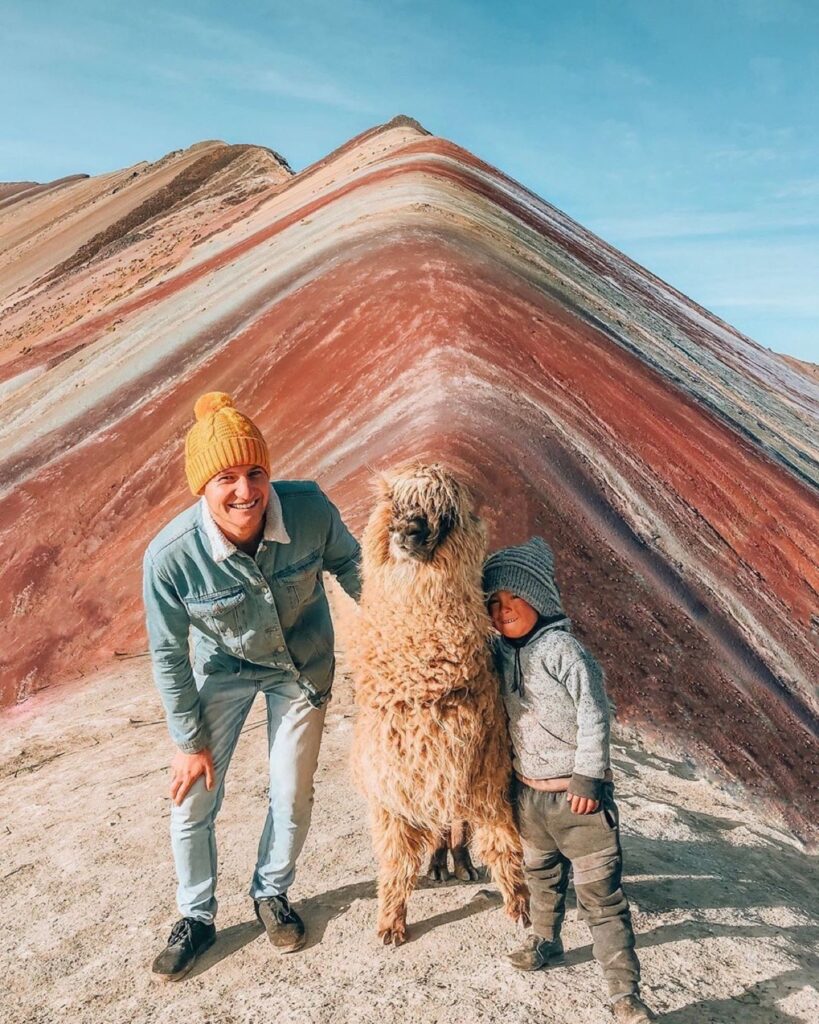
That’s why both excursions are recommended only after at least one or two nights in Cusco. Physical effort — walking uphill where far less oxygen is available than at sea level — is exactly the combination that triggers altitude sickness in someone who hasn’t acclimatized. With a couple of days of prior adaptation, most travelers in decent physical shape complete Rainbow Mountain or the first stretch of Ausangate without major issues, though a slow pace and frequent breaks remain essential.
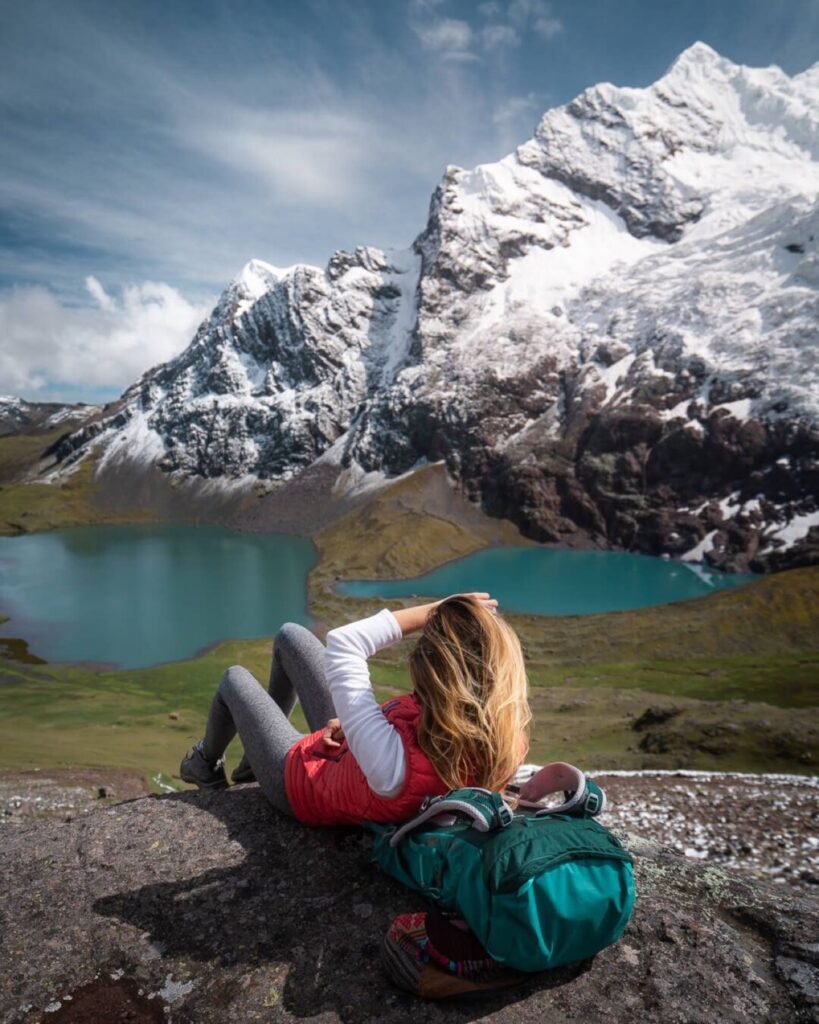
One detail many overlook: at Rainbow Mountain and Ausangate, intense cold adds to the strain of altitude. Bringing several layers of clothing, sun protection (the sun is strong at this elevation) and enough water matters just as much as acclimatization itself.
Recommended itinerary based on altitude
If you’re planning to include Rainbow Mountain or Ausangate in your trip, this order makes the best use of your body’s natural acclimatization:
- Day 1-2: arrive in Cusco (~3,400 m), rest and light activities (city tour, market visit).
- Day 2-3: Sacred Valley (~2,800 m), a good “altitude break” with moderate activity.
- Day 3-4: Machu Picchu (~2,430 m), the lowest and least demanding point of the trip.
- Day 4 onward: now acclimatized, take on Rainbow Mountain or Ausangate (~5,000 m), saved for the end.
This order isn’t a fixed rule, but it’s a solid guide: climb little by little, and leave the toughest high-altitude effort for once your body has already adapted.
Plan your trip around altitude
At Andean Treks we build itineraries that respect acclimatization timing without sacrificing the destinations you want to see. Check out our full-day Machu Picchu tour, our Rainbow Mountain excursion, or the Classic Ausangate Trek. Not sure how to balance altitude and available days? Message us on WhatsApp and we’ll build the itinerary with you.
 Project Zion™ Theme.
